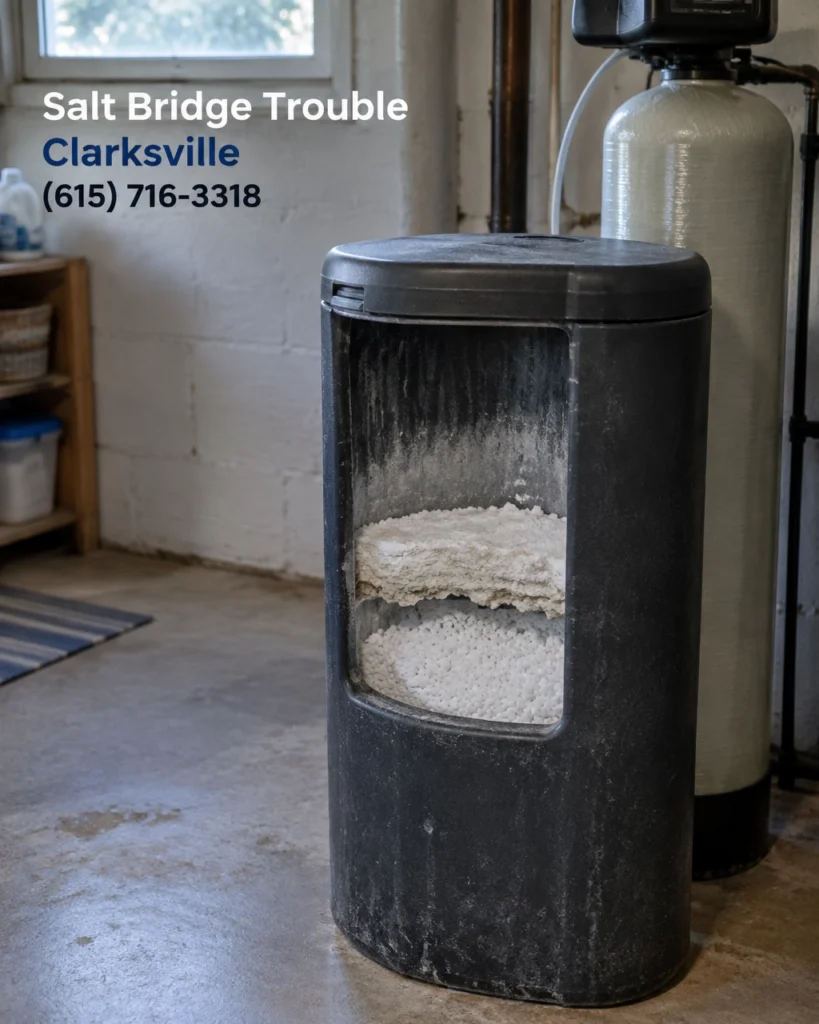
A salt bridge can make a water softener look full while keeping it from making the brine it needs to regenerate. Then hard water creeps back into your Clarksville home, and the softener may seem to run without helping. The Fix It Quick Network matches homeowners with vetted local pros, but a clear, easy-to-reach bridge may be a simple DIY fix. Here’s how to check it safely.
1. Why a salt bridge forms
A salt bridge forms when loose salt hardens into a crust above an empty space in the brine tank. Hot, humid Tennessee summers can add moisture, while cold basements and garages around Clarksville bring temperature swings that encourage salt to cake.
Cheap or unsuitable salt can contribute, as can filling the tank too high. The crust may look like solid rock spanning the tank walls just above the salt pile. Underneath, there can be a hollow gap and water at the bottom that never turns into usable brine. That’s why the tank can look full even when the softener isn’t regenerating properly.
In Montgomery County, where softeners may sit in a damp basement or an unheated garage, a quick look at the salt level can save some head scratching.

2. How to tell if a salt bridge is the problem
Look for signs that hard water has returned. Soap may not lather well, dishes may show spots, or skin may feel itchy after a shower. The softener might appear to run while the salt pile never drops.
Try a gentle push test. Press a clean broom handle lightly on top of the salt. A bridge may cave or give with a hollow thud, while loose salt shifts and solid salt resists. Don’t jab or force the handle down. Also look through the tank wall for a visible crust or standing water well above the salt line.
For example, a Sango homeowner notices the water heater and dishes acting like the softener has quit, then spots a salt crust shaped like a little cave roof above a hollow gap. After gently breaking it with a broom handle, the softener catches back up that night.
Hard water can also leave mineral buildup that slows a faucet. If a faucet is weak, this guide to weak water flow from a faucet in a Clarksville home can help sort out another common symptom.
3. How to break up a salt bridge safely
Start with your softener’s manual. Before touching the salt, unplug the unit or put it on bypass as the manual directs. Use a clean broom handle or clean piece of PVC, not a screwdriver or anything sharp. Sharp edges can crack or puncture a plastic or fiberglass tank.
Gently press near the tank walls at several points, working from the edges toward the middle. Let loosened chunks fall into the water. Scoop out floating pieces with a small container, then let the remaining salt settle below the fill line. Don’t hit the tank or pry against internal parts.
A couple of gallons of hot tap water may help dissolve crusty remains, but check the manual first. Instructions vary by model, so don’t use boiling water or add more than the manufacturer recommends. Once the salt has settled, run a manual regeneration as directed.
In St. Bethlehem, as anywhere, stop after one careful attempt if the crust stays rock solid or the tank feels old and brittle. Don’t force it. A cracked tank can turn a small chore into a leak.

4. When to stop and get matched with a pro
Stop if the bridge breaks but the softener still won’t regenerate. Get help if the tank has months of sludge or dirty water at the bottom, if you smell sulfur, or if the tank is cracked. Don’t open the control head, valve, or brine line fittings.
A failed valve or motor, or an exhausted resin bed, needs a pro’s diagnosis. These aren’t salt-bridge fixes. If you’re near Fort Campbell and the unit still isn’t softening after a manual regeneration, don’t keep poking around inside it.
The Fix It Quick Network can match you with a local pro for the next step. The pros in our network are licensed and insured.
5. What a fix may involve
A simple DIY salt bridge fix costs little beyond a broom handle and an hour or so. A pro visit for a stubborn bridge or full brine tank cleanout may run about $100 to $250, depending on the tank size and how much buildup needs attention. A failed control valve or exhausted resin bed can cost several hundred dollars, which may affect the choice between repair and replacement. These are general planning ranges, not quotes.
For other signs of hard water or changing pressure, see these fall well water and water pressure checks for Clarksville homes and rental properties.
If you’d like help, call or text (615) 716-3318, or request a free match. You choose whether to handle the bridge yourself or get a pro involved. A practical first step is to check the tank and your softener manual.
6. How to keep a bridge from coming back
Keep salt around the halfway mark and never fill past the tank’s fill line. Use high purity water softener pellets, not rock salt. During a monthly visual check, look for caking and gently loosen small clumps before they harden into a crust.
Keep the lid on and the area dry. In garages or basements around Woodlawn and elsewhere in Clarksville, check more often in January and July when temperatures can swing. Quick tip, adding salt in smaller amounts more often is easier than topping the tank off to the brim.

Frequently Asked Questions
Can a homeowner break a salt bridge without damaging the tank?
Usually, if the bridge is easy to reach and the tank is in sound condition. Use a clean, blunt handle and gentle pressure. Stop if the crust won’t give.
How can a water softener seem full but still stop working?
A hardened crust can sit above a hollow space, separating the salt on top from the water below. The tank looks full, but salt isn’t dissolving into brine.
Should hot water be poured into every brine tank?
No. Check the owner’s manual first because guidance varies by model. Use only the amount and temperature it allows.
How soon should the softener work after clearing a bridge?
Run a manual regeneration as directed and give the cycle time to finish. If the water still feels hard afterward, the cause may be beyond the bridge.
What if the softener still won’t regenerate?
Stop DIY work and get matched with a pro. A control, valve, motor, or resin problem needs a closer diagnosis.