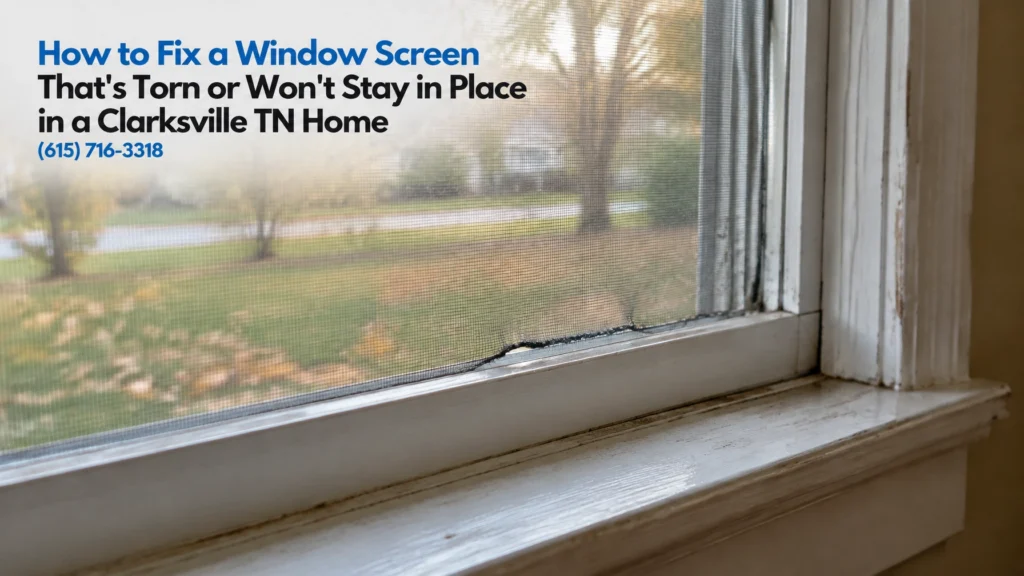
A torn screen or one that keeps popping out can make a simple open window feel like a hassle. Before replacing anything, figure out whether the problem is the mesh, the screen frame, or the window track.
October is a practical time to check. As Clarksville and Montgomery County homeowners start closing windows more often, screens can be cleaned, repaired, and stored before cold weather settles in. A small tear may be patchable. A bent frame needs a different answer.
1. Find out why the screen is failing
Start with the screen out of the window, if it comes out easily. Look across the mesh for holes, loose edges, or a tear along the bottom rail where the screen rubs the sill. Check the aluminum screen frame for a bow, twisted corner, or cracked joint.
Next, look at how the panel fits. If it sits square but the mesh has a small hole, the mesh is likely the issue. If one edge keeps sliding out of the window track, check whether the frame is bent, the springs or tabs are missing, or the channel is worn.
A screen that pops out isn’t always a bad screen. In a St. Bethlehem home, a resident noticed one panel kept slipping loose whenever the window was opened. The screen frame was slightly twisted, so it couldn’t sit evenly in the track.
Check for:
- A loose or missing tab, clip, or spring
- A separated frame corner
- Spline that looks cracked or sits unevenly
- A dirty or obstructed window track
These clues help you decide whether a patch, a rescreen, or a replacement frame makes sense.
2. Remove the screen without forcing it
Screen panels commonly use spring loaded edges or pull tabs. With a tab style panel, open the window and look for tabs along the bottom or side rail. Pull them toward the center, then ease the panel out. Spring loaded panels usually have springs along one edge. Press that side gently toward the frame, then angle the opposite edge free.
The exact direction varies by window. If the panel doesn’t move with light pressure, stop and check for extra clips or locks. Don’t yank one corner or reach outside to pull a screen from an upper window. A bent frame is easy to make worse.
Before removing a screen, take a photo and note which side has the springs or tabs. If removing it feels awkward or unsafe, leave it in place and get help.
3. Patch a small tear or rescreen the panel
A quick patch can work for one small, isolated hole when the surrounding mesh is still taut and in good shape. Clean and dry the area first, then use a screen repair patch suited to the mesh material. A patch may be visible, and it won’t stop a long tear or loose mesh from spreading.
For a long snag, several holes, or mesh pulling away from the frame, a full rescreen is usually the tidier fix. Fiberglass mesh is flexible and forgiving for basic rescreening. Aluminum mesh holds a firmer shape but can crease if bent. Pet screen, often a thicker coated material, is made to resist claws and pushing, but it can look heavier and reduce airflow.
Don’t pull new mesh too tight. Too much tension can bow an otherwise sound frame, leaving the finished panel unable to sit flat. If you’d rather get a broader window check while making seasonal updates, see our guides to window blinds that won’t stay up and a loose curtain rod.

4. Check the spline and frame fit
Screen spline is the flexible cord pressed into a channel around the frame. It holds the mesh in place. If you find hardened spline that crumbles instead of flexing, replace it rather than trying to reuse it. A brittle cord may not hold the new mesh securely.
Spline comes in different sizes, and the right one depends on the frame groove and mesh thickness. If you’re rescreening, take a short piece of the old spline to a hardware store or measure it carefully. Too-small spline may let mesh slip out. Too-large spline can be hard to seat and may push the frame out of shape.
A straight frame can sometimes be reused with fresh mesh and spline. A twisted, sharply bent, cracked, or separated frame may not hold its shape again. If the panel still won’t sit in the track after the mesh and spline are sound, check the tabs, springs, and window channel instead of forcing the frame.
5. Clean, store, and consider the cost
Fall is a good time to wash screens before putting them away. Lay each panel flat, brush off loose dust, then wash gently with mild soapy water and a soft brush. Rinse lightly and let the screen dry completely.
Store screens flat when possible, with a soft layer between panels. If they need to stand upright, keep them somewhere they can’t fall or get bent. Label each one by window so it goes back in the right place next season. Homes around Sango, Fort Campbell, and Woodlawn can also check screens for loose corners before they’re stored for winter.
Costs vary with screen size, mesh choice, frame condition, access, and the panel count. Basic mesh and spline for a DIY repair may cost several dollars to around $15 per screen. A straightforward professional rescreen often falls somewhere around $25 to $75 per standard panel, while a new framed screen may run roughly $35 to $150. Pet resistant mesh and damaged frames can cost more, so ask what the estimate includes.
6. Know when to get matched with a pro
A small patch or gentle cleaning is a reasonable DIY task if the panel is easy to remove and the frame is sound. Get matched with a pro if the frame is badly warped, the corners are broken, the panel won’t stay in the track, or the window itself appears damaged. Full window replacement or a broken frame may need the right specialist.
Fix It Quick Network matches homeowners, realtors, property managers, and investors in Clarksville, St. Bethlehem, and across Montgomery County with vetted local pros. That can help when several screens need attention before a listing, rental turnover, or seasonal maintenance visit. The pros in our network are licensed and insured.
If you’d like a free match, call or text (615) 716-3318, or request one through the contact page. Share how many screens need work, whether the frames look bent, and whether you prefer standard or pet resistant mesh.
7. Frequently asked questions
Can a torn window screen be patched?
Yes, if the hole is small and the surrounding mesh is still firm. A long tear, multiple holes, or stretched mesh is usually better handled with a full rescreen.
Why does my screen keep popping out?
The frame may be bent, a spring or tab may be missing, or the window track may be dirty or worn. Check the panel’s shape and hardware before pushing it back into place.
How do I know what screen spline size to buy?
Take a short piece of the old spline with you or measure it. The right size depends on the frame channel and mesh thickness, so don’t assume every screen uses the same cord.
Which mesh should I choose?
Fiberglass is flexible and common for everyday use. Aluminum is firmer but can crease, while pet screen is thicker and often costs more.
Should screens be stored for winter?
If you remove them, clean and dry them first. Store panels flat when possible, or upright where they won’t fall or bend.