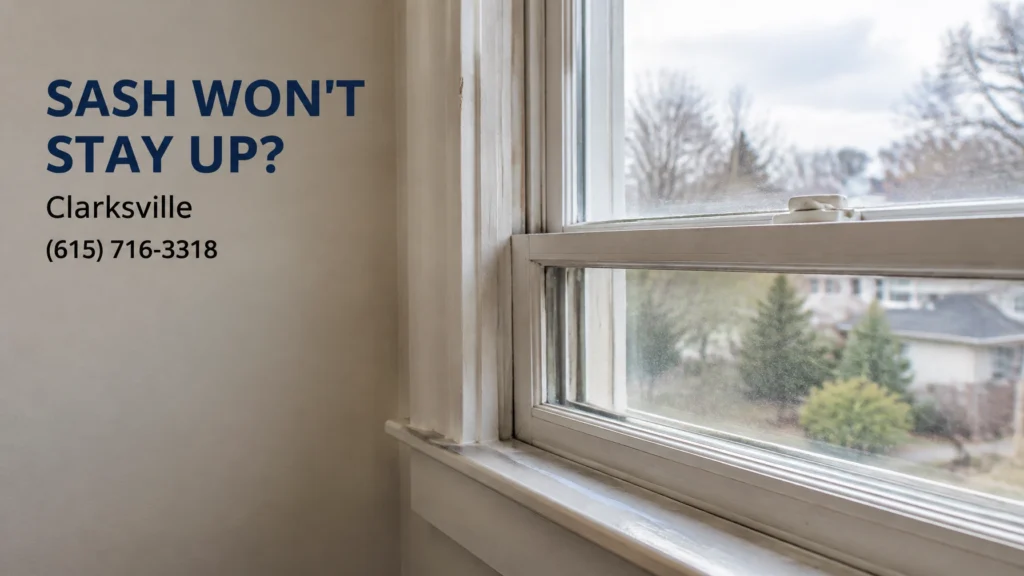
A window sash that slides down after you raise it usually has a balance problem. The balance is the spring, cord, or weight system that helps hold the sash in place. It may be possible to identify the issue with a careful look, but taking apart a spring loaded balance can be risky.
Fall is a good season in Clarksville to test the windows you actually open, before colder nights make a dropping sash more annoying. Start with a simple check, not a forceful lift or a makeshift prop. A few observations can help you decide whether the issue is a small adjustment or a repair for a window pro.
1. Check what kind of window you have
First, confirm that the moving part is a double hung sash. That’s the common style with an upper and lower section that slide vertically. If the lower sash moves smoothly but drifts down when you let go, a worn or disconnected balance is a likely cause. If it tilts or shifts sideways, the pivot hardware or sash guides may also be involved.
Look along the sides of the sash and inside the jamb for visible damage. A white chalky streak under the sash on the sill can be a clue that the sash has been rubbing as it moves. A shim wedged beside a sash by a previous owner may be hiding a balance problem, not fixing it.
Don’t assume the entire window needs replacing. In many cases, the frame and glass are sound, and the balance is the part that needs attention. Note whether the upper sash also slips, or whether the problem is limited to one side or one sash.
2. Make a safe, simple inspection
Keep both hands on the sash while you raise and lower it slowly. If it drops, close it gently and keep it closed until you can address the problem. Don’t put your fingers into the jamb or try to catch a falling sash.

With the sash closed, check whether its edges sit evenly in the frame. Look for a cracked plastic shoe, a loose visible clip, a frayed cord, or a gap that looks different on one side. Avoid removing jamb covers or pulling on a spring or cord. Those parts can be under tension.
Take a photo of any visible markings and the window’s general condition. The balance type and sash size matter if parts need to be replaced. If the window is above ground level, the sash feels heavy, or anything is cracked or loose, stop there. That goes for a two story rental in Sango just as much as a single story home in Woodlawn. A screen is not a safety barrier, and this is not a good repair to attempt near an open drop.
3. Try only the adjustment the maker allows
Some windows have a simple adjustment for sash friction. Others use spring balances, spiral balances, cords and weights, or tilt shoes. The parts and adjustment steps vary, so don’t turn a screw or tension a spring based on a guess. Check the window maker’s instructions if you can identify the brand and model.
If the instructions describe an adjustment that can be made without removing the sash or opening a balance mechanism, follow them carefully and make only a small change. Test the sash with both hands supporting it. It should travel smoothly and stay in position when released. Stop if movement becomes rough, uneven, or hard to control.
Don’t wedge a shim under the sash or leave a heavy object holding it open. That can mask the fault and leave the sash at risk of dropping. For an overview of the parts and risks, This Old House explains sash spring balancers, including why the correct balance has to match the window.
4. Know when to get matched with a pro
A broken or weak balance often needs a properly matched replacement. The sash may need to be removed to reach it, and spring tension can release suddenly. A pro can check the balance, pivot shoes, sash fit, and visible frame damage together, rather than replacing a part based on appearance alone.
Think of a rental home near St. Bethlehem where a lower sash starts sliding down during a routine room check. The property manager notices a shim at the jamb and a rubbing mark on the sill, then keeps the sash closed and arranges an inspection instead of prying at the balance. That small pause helps avoid turning a manageable repair into a damaged sash or broken glass.
For homeowners around Sango, Fort Campbell, and Woodlawn, the same basic rule applies. A window that won’t stay open is usually a repair question, not an automatic replacement. If the wood is soft, the glass is cracked, or the sash is unusually heavy, leave the work to a qualified window professional.
5. Think about the whole window, not just the sash
A balance repair won’t fix a rotting sill or a loose frame. Check for soft wood, peeling paint, water marks, or trim that feels loose, and mention those signs when arranging an inspection. Fixing the support issue and any related damage together can make the repair more straightforward.
If you're also considering storm windows for an older wood window, the U.S. Department of Energy's wood window guidance discusses repair and rehabilitation before adding a storm window. It also notes that the sill should be sound. A storm window won't correct a failing sash balance, so address the operation problem separately.
If you're working through a longer repair list before a listing or closing deadline, this fall closing season guide for Clarksville homes can help you sort what matters first. A cold spot that feels like a window problem can also come from a nearby drafty exterior door, and that guide covers a different fix.
Fix It Quick Network is a referral network and does not perform the repairs. We can match homeowners, realtors, property managers, and investors in Clarksville and Montgomery County with a vetted local pro. The pros in our network are licensed and insured.
If you’d like help, call or text (615) 716-3318, or request a free match. A useful next step is to take a photo of the sash, its visible hardware, and any damage before you reach out.
6. FAQs
Why does my window fall after I raise it?
A worn, broken, or disconnected sash balance is a common reason. A damaged pivot shoe or a sash that no longer sits correctly can also cause slipping.
Can I hold the sash open with a shim?
It’s better not to. A shim can conceal the cause, and the sash may still drop or damage the frame.
Should I replace the whole window?
Not necessarily. If the frame, sill, and glass are in good condition, the issue may be limited to the balance or sash hardware.
Is it safe to replace a spring balance myself?
It depends on the window and the balance system. Because some parts are under tension and the sash can be heavy, get a pro if you’re unsure, the sash needs to come out, or the window is above ground level.
What should I share when requesting a repair?
Share the window's location, whether one or both sashes slip, any visible markings, and clear photos of the sash and visible hardware. Include any cracked parts, soft wood, or water marks you've noticed.
Do all double hung windows use the same balance parts?
No. Balance styles and strengths vary by maker and sash weight. A replacement has to match the window, which is one more reason photos and any model markings help when you ask for a match.