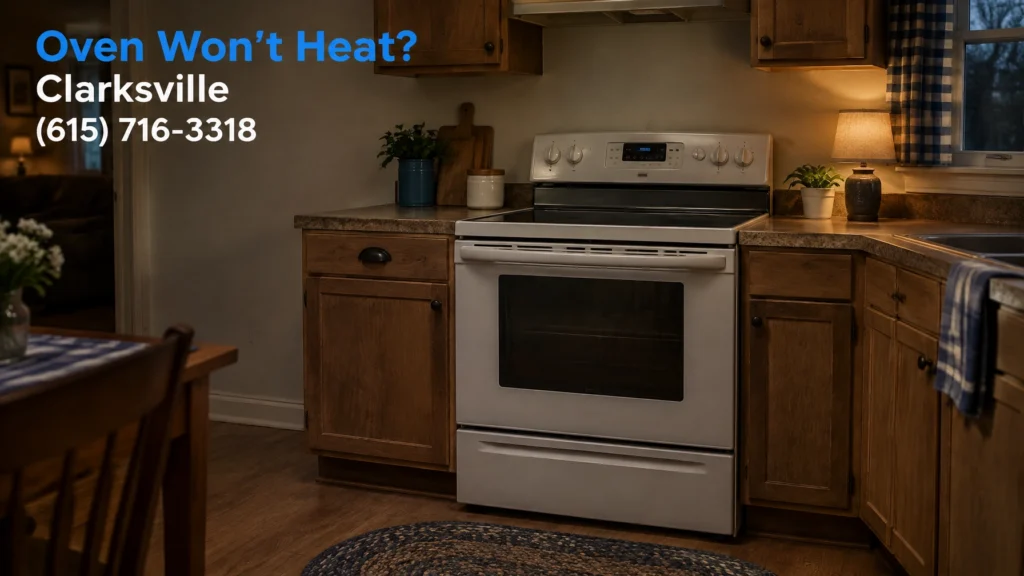
A casserole that comes out cold in the middle the night before hosting can throw off the whole evening. If your oven won’t heat up, or takes ages to warm, the frustration makes sense.
Start with what the oven is doing, not with a guess about the failed part. A few safe checks can point you in the right direction, and none require taking the oven apart.
1. Confirm What the Oven Is Actually Doing
The pattern matters. An oven not heating at all may have a power, setting, or component problem. Slow preheating can point to a weak heat source, a door that doesn't close fully, or a supply issue. Uneven baking may come from temperature accuracy, rack position, or hot spots.
Notice whether bake works while broil does not, or the other way around. Those functions use different heating parts, so one working doesn't mean the whole oven is fine.

A St. Bethlehem family found that out before a holiday meal. Their casserole stayed cold in the middle even though the broil element still glowed, which felt confusing until a hairline split near one end of the bake element explained it. Note what works and what doesn’t before buying anything.
2. Start With Power and Settings Before Parts
Check the simple things first. A breaker can look almost normal even when it has tripped, and some ovens need the clock reset after an outage. Look for delay start, timer mode, or control lock settings that stop baking from starting.
If the breaker looks tripped, reset it once. If it trips again, leave it off and get help. Check the manual if the display shows an error or the controls act differently than expected.
In Clarksville and across Montgomery County, a quick setting check can save a needless parts guess. If everything looks right, move on to the clues you can see safely.
3. Electric Ovens, Check the Bake Element
A visible bake element can show damage. Look for blisters, a blister that has split, or a small gap where the element looks broken. A faint burnt smell beforehand is another clue, though not proof of the cause.

If the broil element glows but the bake element stays cool, the bake element may be faulty. Shut off power at the breaker or unplug the oven before touching anything, and let it cool. If you can’t reach the plug or breaker safely, stop at a visual check.
A replacement part may look simple, but access and connections vary by model. Keep the check visual unless you can disconnect power confidently and follow instructions.
4. Gas Ovens, Watch the Igniter
Watch a normal bake cycle without removing panels. The igniter should glow bright cherry red, and the burner should light within about a minute, though timing varies by model. A dull orange glow that never lights the burner points to a tired igniter.

If you smell gas, stop. Turn the oven off, leave the area, and contact the gas utility or a qualified service pro from outside. Don’t try to relight it, and don’t continue testing.
Gas components need careful handling. Observe only what you can see during normal operation, and get help if the burner doesn't light as expected.
5. When Heat Comes but Baking Still Fails
An oven that heats but bakes poorly may read temperature inaccurately. An inexpensive oven thermometer is a practical check. Set it near the center rack, let the oven finish preheating, and compare the reading with the set temperature over several cycles.
Some movement is normal as the oven cycles. If the difference is consistent, check the manual for a calibration or offset setting. A faulty sensor can also skew readings, so don't assume calibration is the fix.
Check the basics too. Keep pans centered, use the recommended rack position, and don't cover the oven floor with foil, which can block heat flow. If one side browns faster, try a different rack before blaming a part.
6. Rentals and Listings, Why This One Matters
A cold oven can turn a showing or a turnover into a problem. In Sango or near Fort Campbell, a quick check before a listing avoids a last-minute surprise when someone tries to bake.
Property managers should note the mode tested, whether the oven preheated, which function worked, and whether the temperature seemed even. Photograph the display or the thermometer reading when relevant. Don’t photograph gas parts after touching anything.
Busy holiday schedules make it harder to line up service at the last minute. Booking turnovers ahead gives more room to find the issue and plan the next step. A walkthrough before hosting can also include a kitchen cabinet hinge fix and fall kitchen exhaust and range hood checks. In Woodlawn or anywhere else, clear notes and photos make the problem easier to explain.
7. Know When to Get Matched With a Pro
Simple settings and visual checks are sensible starts. Anything beyond them may involve high voltage, gas, or parts that are hard to reach. Element swaps with power off are a gray zone, since access and wiring differ by model.
A control board replacement, wiring repair, or gas line work is pro territory. The same goes for a breaker that trips repeatedly or an oven that smells of gas.
Fix It Quick Network is a referral network, not a repair crew. We match homeowners, realtors, property managers, and investors with vetted local pros for home repair in Clarksville TN and Montgomery County. The pros in our network are licensed and insured. If you’d rather have a handyman in Clarksville TN take a look, a free match sorts out the right service.
If you’d like help, call or text (615) 716-3318 or request a free match. Share whether the oven is electric or gas, what you’ve noticed, and what you’ve checked. It’s a practical next step, with no guessing required.
8. Oven Heating FAQs
How much does it cost to fix an oven that won't heat?
A basic bake element swap may fall in the low hundreds, while a control board or gas component costs more. Model, part availability, gas or electric, and access all affect the number. A local pro can assess the issue before estimating.
Can a homeowner replace a bake element safely?
Some homeowners are comfortable with it if power is fully disconnected and instructions are clear. Access and wiring vary, so stop if anything looks unfamiliar. Don’t touch the element while power is connected.
Why does broil work but bake doesn't?
Bake and broil may use different heating parts. If broil works but bake stays cool, the bake element or its circuit may be the cause. The symptom narrows the check without confirming a failure.
How do we know the oven temperature is wrong?
Use an oven thermometer on the center rack and compare its reading with the set temperature after preheating and several cycles. A repeated difference beats one glance. The model manual has the calibration steps.
Is a slow preheat a bad element or something else?
It could be a weak heating part, but settings, a door that doesn’t close fully, or a supply problem can slow preheating too. Check the settings and door first. If it stays slow, note how long it takes and get it assessed.
Can the same pro check the cooktop burners too?
Ask when requesting a match, since the right local pro may be able to assess both. Mention the cooktop as a separate concern so the match can account for it.