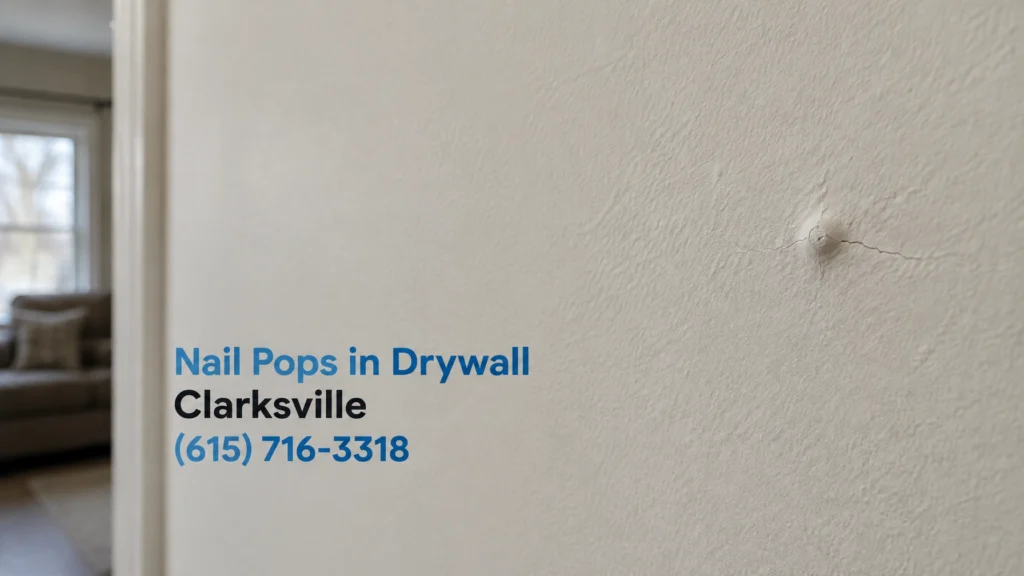
1. What a nail pop actually is
A nail pop is a drywall fastener that has started to push the panel away from the framing. You might see a raised bump, a popped head sitting just proud of the paint, or a hairline ring crack around it. That little crack is common.
Most nail pops in drywall are cosmetic. Framing lumber can shrink or shift as humidity and temperature change, and newer homes may show pops as the lumber dries during the first couple of years. Houses settle, too. In Clarksville and across Montgomery County, humid summers followed by drier, colder winters can make that movement more noticeable.
Ceiling pops near an attic are common when temperatures swing from a hot July to a cold November. A bump can feel alarming, especially before holiday guests arrive. One or two isolated pops usually don’t mean the wall needs major work.
2. Check the wall before patching
Look closely before reaching for spackle. Press gently around the bump and check for a water stain, bulging drywall, or cracks spreading across the surface. One or two small pops often come from ordinary house movement.
Pay attention to how quickly they appeared and how the drywall feels. Many new bumps showing up at once, a brown ring, or a soft spot can point to moisture or another issue. Don’t just patch over those signs. That’s a good time to get matched with a pro.
Also check whether the fastener is a screw or an actual nail. Older Clarksville homes may have real drywall nails, while a home near Fort Campbell may show new pops after a move and the first cold snap. If the fastener type or the cause isn’t clear, a closer look can prevent a repeat patch.

3. Fix a small, dry nail pop
A small, isolated pop is often a reasonable do it yourself repair if the drywall is firm and there are no signs of moisture. The goal is to hold the panel tight to the framing, not simply hide the bump.
- Find the framing behind the drywall. Drive a drywall screw about an inch or two above the pop and another about an inch or two below it, into the same framing.
- Set the popped fastener just below the surface without tearing the drywall paper. If it’s a loose nail, set it deeper and add screws nearby, or remove it and replace it with a screw.
- Fill the shallow indent and the old ring crack with lightweight spackling or joint compound. For a hairline crack, mesh tape can help support the patch.
- Let the filler dry, sand lightly, then touch up the paint.
Keep the work small. There’s no need to replace the panel or recoat the whole wall for one pop. For another kind of wall surface fix, see this guide to repairing a peeling wallpaper seam in a Clarksville home.
A Sango homeowner found a row of bumps along the ceiling near an exterior wall in early November, just before hosting Thanksgiving, and nearly scheduled a full drywall replacement. A screw check and three small patches had the ceiling flat before guests arrived. The job was about attitude, not scale.

4. Make the patch blend in
Thin coats beat one thick coat. Spread each coat a little wider than the last, feathering the edges so the patch doesn’t leave a noticeable ridge. Once it dries, sand gently. Too much sanding can tear the paper or make a fresh dip.
That chalky sanding dust gets everywhere, so protect nearby floors and wipe the wall before painting. Prime the patch first. Without primer, the paint can flash shiny when afternoon light rakes across the wall.
Use paint with the same sheen as the surrounding surface. Even then, an older wall in Clarksville may not match perfectly because the paint has faded or the sheen has changed over time. A small test spot can help set expectations before touching up a larger area.
5. When the wall is trying to say something
A cluster of pops deserves more attention than one bump. Several along a line may mean a loose row of fasteners or ceiling movement, including truss uplift. Don’t keep adding filler if the same area keeps opening.
Stop patching and get eyes on the wall if pops come with brown water stains, soft drywall, or cracks above doors and around corners that are getting wider. In homes around St. Bethlehem or Woodlawn, as elsewhere in Montgomery County, those signs call for checking the cause before the surface is covered.
If the problem looks widespread or involves moisture or structural movement, the Fix It Quick Network can point you toward the right specialist. The network matches homeowners with vetted local pros. It doesn’t perform the repair itself.
For a separate wall concern, the guide to anchoring items safely to drywall explains why sound drywall and secure framing matter.

6. Help keep nail pops from coming back
You can’t stop a house from moving, but steady indoor conditions may reduce seasonal swings. Keep winter humidity reasonably steady, and make sure attic ventilation is working as it should. A recurring pop in the same spot deserves a closer look at the framing or insulation behind it.
Military families moving in and out near Fort Campbell may notice fresh bumps after a home has sat empty or changed hands. A cold snap can make them easier to spot. Note where the pops are and whether they return after a repair.
For a handful of isolated pops, DIY materials may cost only a few dollars. A pro visit for several pops commonly falls in the low hundreds, depending on how many need repair and how much sanding, priming, and paint matching is involved. Those are planning ranges, not quotes.
If you’d rather have a vetted local pro handle it, we’ll match you free. The pros in the network are licensed and insured. Call or text (615) 716-3318, or request a free match. Share how many pops you see and whether there’s any staining or softness. That’s a practical first step.
Frequently Asked Questions
Why do nail pops happen?
Framing lumber can shrink or shift as temperature and humidity change. Fasteners may also loosen if the drywall wasn’t held firmly against the framing.
Are nail pops a sign of a serious problem?
Usually, a single pop is cosmetic. Many appearing quickly, a brown stain, soft drywall, or widening cracks are reasons to check for moisture or movement before patching.
Can a nail pop be fixed without repainting the whole wall?
Often, yes. A small patch may only need a dab of matching paint, though older paint can be hard to match exactly.
How much does nail pop repair cost in Clarksville?
DIY spackling supplies can cost a few dollars. A pro visit for a handful of pops commonly lands in the low hundreds, depending on the number of repairs and paint matching needed. A matched pro can review the actual wall and explain the cost.
Do nail pops come back after being fixed?
They can, especially if the framing keeps moving or the original fastener wasn’t secured. If the same area pops again, check for a recurring cause rather than covering it with another layer of filler.