1. What kind of scratch you’re looking at
The scratch’s depth tells you what kind of repair may work. A faint scuff or surface mark affects the finish but hasn’t cut into the wood. A deeper scratch breaks through the finish, while a gouge removes or pushes aside wood. A dark mark can also be a stain rather than a scratch.
Try the fingernail test. Gently run a fingernail across the mark. If it catches on the ridge, the finish is likely broken. Don’t press hard or pick at the floor.
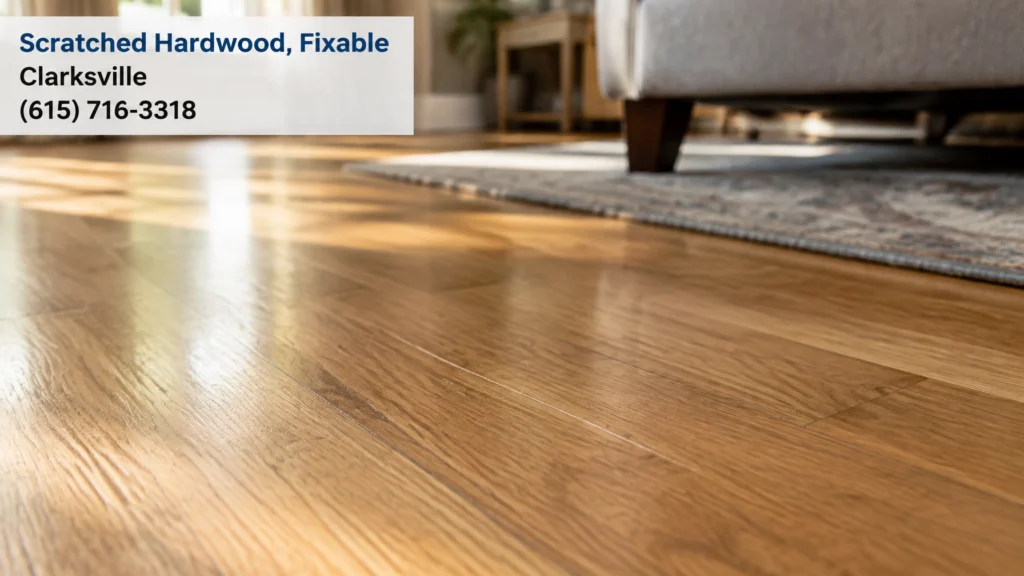
In a Clarksville home, raking afternoon light across the boards can reveal fine scratches that are easy to miss in softer light. That’s useful for checking the area, but glare can make small marks look more dramatic than they are. Start with what you can feel and see.

2. What to check before you fix anything
Check the floor’s finish before applying a repair product. Factory finished boards may have a different surface than a floor finished after installation. If you have leftover boards, check a closet, basement, or storage area for a label or sample. A builder or flooring installer may also know what finish was used.
This matters in older Clarksville homes, including some in Sango and St. Bethlehem. Floors with wax or oil finishes can react badly to polyurethane touch up products. Don’t assume a repair kit works just because its color looks close. Test a compatible product in a hidden spot first, and follow the floor or product maker’s directions.
The scratch’s depth still guides the fix. A shallow mark may only need careful cleaning and a touch up product. A scratch that exposes bare wood needs a more cautious approach, especially if you don’t know the finish. Keeping the finish type in mind prevents a small flaw from becoming a larger patch.
3. Fixing surface scratches and scuffs
Clean the area first. Use a slightly damp microfiber cloth, then let the floor dry fully. Avoid soaking the boards or using a harsh household cleaner. Grit left under a cloth can make the mark worse.
For a light scratch, try a wood floor marker or stain pen that closely matches the floor. Test it somewhere hidden, apply a little at a time, then wipe away excess so the mark doesn’t turn into a dark stripe. A soft cloth may buff out a light haze in the finish, but don’t scrub hard.
Step back and check the spot in different light. A patch can look fine straight on and stand out when sunlight skims across the boards. If the color or sheen looks uneven, stop rather than layering on more product. In Clarksville, a sunny window makes a small mismatch especially visible in the afternoon.
4. Fixing deeper scratches and small gouges
A deeper mark needs a careful color match. For a small gouge, a compatible filler stick or wax stick can fill the missing space. Press in just enough material to fill the mark, then gently scrape it flush with a plastic card. Avoid metal edges that could leave a new scratch.
If a scratch runs through the finish into bare wood, a stain pen may help blend the exposed area. A thin coat of water based polyurethane can sometimes protect the spot, but only if it’s compatible with the existing finish. Test first. Thin coats are easier to control than one thick coat, and the product label should guide drying time and use.
A spot repair may still look different from the surrounding floor. On some site finished floors, screening and recoating the whole room blends better than treating a single mark. That’s a job for a pro, not a quick patch to try across the floor. Stop if the scratch is wide, the finish is unknown, or the test area looks cloudy.

5. When the floor is saying something bigger
Look beyond the scratch if the surrounding floor looks or feels different. Several marks clustered in a traffic lane can mean the finish is wearing thin. Splinters lifting at the edge, gray or blackened wood around an old scratch, or gaps that widen with seasonal changes deserve a closer look. Darkened wood can be a sign that moisture got in.
A scratch near a squeaky section may come with movement underneath, not just surface wear. If the floor also feels soft or bouncy, see how to check a squeaky floor. Worn stair treads and floor traffic can show up together, so this guide to stair and stairway repair may help you spot other areas worth noting.

Picture a Woodlawn family shifting a sectional before Thanksgiving and finding three fresh scratches across a busy lane. If each mark is shallow, a tested stain pen or wax stick may be enough, rather than assuming the whole room needs refinishing. In Montgomery County, rental turns near Fort Campbell can also reveal heavy wear after tenants move out. If several boards are involved, or raw wood is exposed across a room, get matched with a pro.
6. Preventing the next round of scratches
Small habits help protect hardwood. Put felt pads under furniture legs and check them each fall. Replace pads that have worn thin or picked up grit. A felt pad gone gritty can scratch the floor every time a chair moves.
Lift furniture when you can. If it’s too heavy, use a clean blanket to slide it slowly. Add rugs near doorways and in busy lanes, and dry sweep or dust mop often. Tracked in grit acts like sandpaper under shoes. Keep pet nails trimmed, since indoor pets are a common source of scratches in Clarksville homes.

November brings guests, chair shuffling, and dropped serving pieces. A quick sweep before and after company can help. If you’d like a vetted local pro to assess damage, Fix It Quick Network is a referral network, not a repair crew. We match homeowners with vetted local pros, and the pros in our network are licensed and insured. Call or text (615) 716-3318, or request a free match. A practical next step is to take a clear photo and note whether your fingernail catches.
FAQs
Can deep scratches be fixed without refinishing the whole floor?
Sometimes. A small, isolated scratch may be filled and touched up, but the repair can still look different from the surrounding finish. A wide gouge or exposed wood across several boards may need professional repair or refinishing.
Do scratch repair kits work on engineered hardwood?
They can help with some surface marks, but engineered hardwood has a limited wood wear layer. Check the floor maker’s guidance and use a product made for that finish. Avoid sanding unless the floor’s construction and wear layer are confirmed.
How much does professional hardwood scratch repair cost?
Small DIY kits can cost a few dollars to around twenty dollars. Professional spot repair or a screen and recoat commonly falls in the low hundreds, depending on room size, number of boards, finish, and prep. Full refinishing costs more. These are broad planning ranges, not quotes.
Should scratches be repaired before selling or listing a home?
Consider repairing noticeable scratches before listing, especially in a main living area. Buyers often notice floors early, and a tidy floor can help a home feel cared for. Ask a pro whether a small touch up is suitable or if the finish needs broader work.
How long does a scratch repair last?
It depends on the finish, the match, and the traffic the area gets. A compatible repair can hold up well, but heavy foot traffic, pets, grit, or furniture movement may wear it sooner.