1. Check the build year before anything gets scraped
Check the build year before touching the ceiling. Popcorn texture installed before 1980 may contain asbestos, and you can’t tell by looking. Clarksville has plenty of 1950s through 1970s ranch homes near downtown and around Fort Campbell, so age matters more than appearance.
Testing means having a small sample checked by a lab. A mail-in kit may be an option, but follow its instructions carefully. Testing is a small cost compared with the risk and cleanup of scraping material that contains asbestos.

Don’t sand it, scrape a corner to see what happens, or run a shop vac over dust. If the test comes back positive, stop and ask a specialist about options such as encapsulation or an appropriate skim coat. Asbestos abatement is a specialty job. The Network will point you to the right specialist rather than handle it.
2. Find out why the texture let go before removing the rest
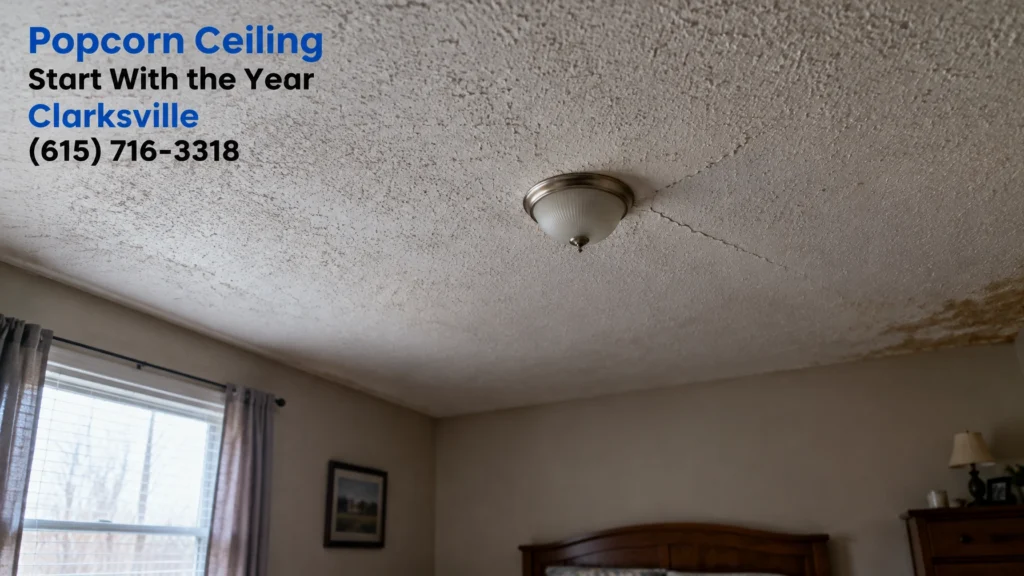
Find the cause before scraping more. Look for loose patches, bubbling, a hollow sound when tapped, or a chalky smear on a fingertip after rubbing a loose spot. A faint brown ring around a ceiling fixture or smoke detector can be easy to paint over, but it needs investigating first.
The usual culprits are a roof or flashing leak, a bathroom fan venting into the attic instead of outside, attic humidity, or paint applied over a damp ceiling. A ceiling is usually the last place a leak shows up and the first place it gets noticed.

A homeowner in St. Bethlehem started scraping a bedroom ceiling on a Saturday morning. One section came off in a clean sheet while another wouldn’t budge. The difference led to a bathroom fan venting into the attic right above that room. For a separate fastener issue, see drywall nail pops.
3. Decide between removing it, skim coating it, or covering it
Choose the finish before planning the work. Removal means water, scraping, dust, and a fair amount of surface preparation. A skim coat leaves the texture in place beneath new joint compound. Labor can land about the same as removal, but it avoids scraping the old finish.
A thin drywall overlay is usually the fastest cover and can hide cracks. It drops the ceiling by an inch or so, though, so trim and fixtures may need adjustment. In Sango, Montgomery County, or elsewhere around Clarksville, ceiling height and the room’s existing details help determine which option makes sense.
As general planning guidance, removal and prep often run about $1 to $3 per square foot, not as a quote. Square footage drives the total. Ceiling height, room size, furniture that needs moving, and test results all affect the cost. A positive asbestos test changes the plan entirely.
4. Set up the room so the mess stays in one place
Plan the room before the first spray. This is the part people underestimate, and it’s why a weekend job can stretch into two weeks. Move all furniture out rather than trying to cover it. Put plastic sheeting along the walls with a lip turned up at the floor, then cover the floor with rosin paper or a drop cloth.
Turn off the HVAC system and tape shut every supply register and return. Shut off power to the ceiling fixtures at the breaker before bagging them or having them dropped. Have a plan for bagging and carrying the debris. Wet texture gets heavy fast, and loose scraps can spread beyond the work area.
A bucket of water and a wide blade can track a wet line across a room faster than expected. Finishing the setup first keeps cleanup manageable, whether the room is in Woodlawn or closer to downtown.
5. Soak it, then scrape in small sections
Work only after testing confirms the ceiling is safe to disturb. Use warm water in a pump sprayer, apply a light pass, and wait 15 to 20 minutes before spraying again. Start with a 3-by-3-foot section and see how it responds before moving on.

Too much water can turn the texture soupy, run it down the wall, and leave it stuck on the plastic. Too little water makes the blade drag across a dry ceiling and can tear the drywall’s paper face. Use a 4-inch blade around edges and a 10-inch blade across the open field. In a Clarksville bedroom, steady small sections are easier to control than trying to rush across the whole ceiling.
Gouges happen. A skim coat of joint compound is the normal next step, not a sign the job has failed.
6. Get the ceiling ready before the first coat of paint
Prepare the bare surface before opening the paint. Bare drywall and joint compound soak up paint unevenly, so drywall primer goes on first. It’s not optional. Look for seam tape and joints that were buried under the texture. The old finish may have hidden sloppy taping that’s now easy to see.
Skim the low spots, then sand with a pole sander. Hold a work light flat against the ceiling so its shadows reveal high spots that overhead lighting hides. Prime the surface, then apply ceiling white in a flat finish. Two thin coats beat one heavy coat.
A ceiling can look different at night under a lamp than it does in daylight. Check the surface under a work light before calling it done. For more detail on finish choices and surface prep, see interior painting and wall preparation.
If you’d like help choosing a safe next step, Fix It Quick Network is a referral network that matches homeowners with vetted local pros at no cost to the homeowner. The pros in the network are licensed and insured. Call or text (615) 716-3318, or request a free match. Start by sharing the home’s age and what the ceiling is doing.
Frequently asked questions
Can popcorn ceiling texture contain asbestos?
Yes. Texture installed before 1980 may contain asbestos, and appearance alone can’t confirm what’s in it. Don’t sand or scrape an older ceiling before testing. If the result is positive, stop and ask an asbestos specialist about safe options rather than treating it like a standard removal job.
How long should the ceiling soak before scraping?
Start with a light spray and give it 15 to 20 minutes to absorb. Then spray again if needed. Work in small sections and check that the texture releases without scraping hard. If it stays dry or won’t loosen, stop rather than forcing the blade and damaging the drywall paper.
Is skim coating a reasonable alternative to removal?
It can be. A skim coat leaves the existing texture in place beneath new joint compound, while a thin drywall overlay covers it with new board. Both options need assessment, especially if the old texture tested positive for asbestos. A specialist can help determine whether covering is appropriate.
What affects the cost of removing popcorn texture?
Square footage is the main driver, with general removal and prep often ranging from about $1 to $3 per square foot. Ceiling height, room size, furniture that needs moving, surface condition, and test results can change the total. That range is for planning, not a quote.
Does bare drywall need primer before ceiling paint?
Yes. Bare drywall and joint compound absorb paint differently from finished surfaces, so drywall primer helps provide a consistent base. Check seams and low spots before priming. Afterward, use a flat ceiling finish and inspect it under a work light, since evening lamp light can reveal flaws daylight misses.