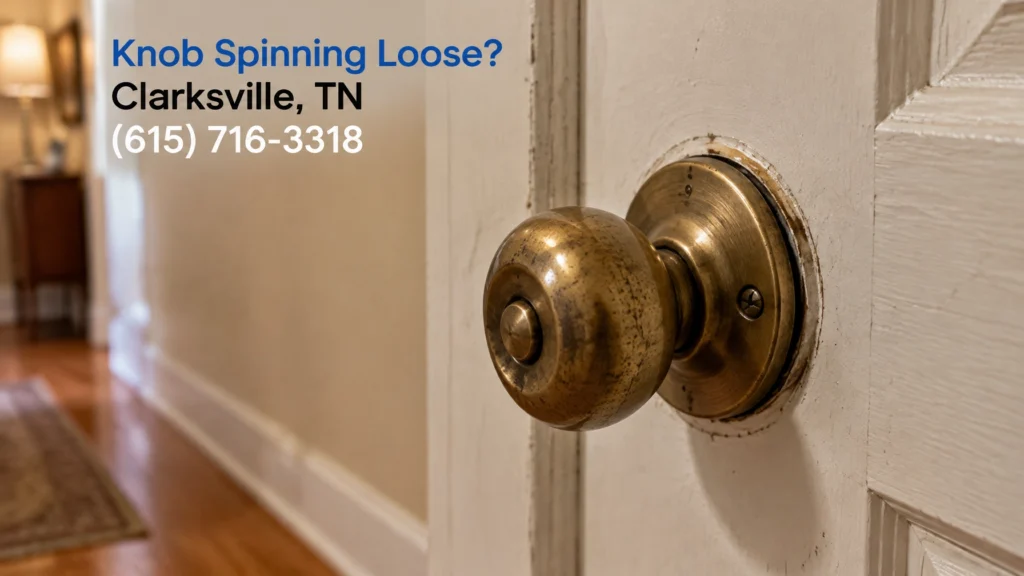
A door knob that spins without catching, a sticky latch, or a rosette that keeps wobbling can make a simple doorway frustrating. Replacing the knob is often manageable if the new hardware matches the holes and latch already in the door.
The key is to check the fit before buying parts, then test the latch while the door is open. This guide covers interior knobs, exterior hardware, and when to get matched with a pro.
1. Check whether the knob needs replacing
Start with the handle and latch. With the door open, turn the knob or lever and watch the latch tongue on the door edge. If the handle turns without moving the latch, or the latch sticks and binds, the hardware is worn. A wobbly rosette can leave a scuffed ring on the door face, while stripped screw holes may keep the knob loose even after tightening.
Sometimes the problem is alignment, not the knob. If the latch works smoothly with the door open but misses the strike plate when the door closes, check the hinges and strike before replacing hardware. This guide to fixing an interior door that won’t latch can help narrow down the cause. In Clarksville homes, worn finish alone may be a good reason to update a knob, but a latch that catches poorly deserves a closer look.
2. Choose hardware that fits the door
Measure the existing holes before buying a replacement. The large hole through the door face is the cross bore, usually 2-1/8 inches across. The smaller edge bore holds the latch, commonly about 1 inch. Measure from the door edge to the center of the cross bore to find the backset, usually 2-3/8 inches or 2-3/4 inches.
Check the latch faceplate, too. Its corners may be rounded or square, and the replacement should match the cutout or include a faceplate that fits. Then choose the right function.
- Passage knobs turn freely and don’t lock, useful for halls and closets.
- Privacy knobs lock from inside, commonly for bedrooms and bathrooms.
- Keyed entry knobs need a key from outside and are used on exterior doors.
In Montgomery County, most standard interior replacements fit existing openings, so measuring first saves a return trip.

3. Remove the old knob and latch
Keep the door open while taking the hardware apart. If the door closes with the knob removed, the latch may not retract, so avoid getting stuck on the wrong side. Remove the two mounting screws on the inside half of the knob, then pull the two knob halves apart.
Next, remove the screws holding the latch faceplate to the door edge. Pull the latch straight out. If a decorative rosette hides the mounting screws, check for a small slot or release tab around its edge and follow the hardware instructions.
Set the parts aside in order, especially if the old latch has a different shape from the new one. A Fort Campbell rental turnover can make a loose bedroom knob feel urgent, but forcing a stuck screw can leave more damage to fix.
4. Fit the new latch and mount the handles
Set the replacement latch to the measured backset if it adjusts between 2-3/8 inches and 2-3/4 inches. Slide it into the edge bore with the beveled side of the latch tongue facing the door jamb, in the direction the door closes. The faceplate should sit flat against the door edge.
Insert the new knob’s spindle through the latch, then line up the two handle halves and mounting screws. Tighten the screws evenly until snug. Don’t overtighten, since that can bind the handle or damage the door.

Before closing the door, turn the handle several times and confirm the latch pulls back and springs out smoothly. In Sango, as in any busy household, a quick open-door test spares you a misaligned latch after the door has shut.
5. Check the strike and privacy release
Close the door gently and see whether the latch enters the strike plate opening. If it misses, look for a rub mark. A loose plate may only need its screws snugged. For a small mismatch, careful adjustment may be possible, but don’t widen the opening before checking the door’s alignment.
If the new latch tongue hangs halfway out of the strike plate, or the door needs a shove to close, stop and check the latch fit and plate position. A privacy knob also has a small emergency release hole on the outside, operated with the pin supplied with the hardware. Keep that pin handy.
Older doors around St. Bethlehem may have different hardware cuts than newer interior doors. If the new faceplate does not sit flat or the latch is the wrong length, don’t force it into the cutout.

6. Treat exterior hardware as a bigger job
A keyed entry knob is different. It has a key cylinder and needs to operate correctly from both sides. On an exterior door, a keyed knob is often used with a separate deadbolt. Keyed hardware takes more care, particularly if the lock must match other keys or security is a concern.
Check the door’s fit and weatherstripping, too. A knob replacement won’t fix a draft, a rubbing door, or a worn seal. This guide to fixing a drafty exterior door before winter covers gaps and weatherstripping.
A basic passage or privacy knob often costs around $15 to $60, while keyed entry sets run more. A straightforward pro swap is usually a small job, but door-edge changes or security hardware can add cost. Woodlawn homeowners with older mortise locks may need a compatible specialty part rather than a standard knob set.
7. Know when to get matched with a pro
Stop if the bore holes are stripped, the door-edge cutout is in the wrong spot, or the new latch won’t sit flush. Older homes may have a mortise lock, which is built into a deeper pocket in the door and differs from a standard tubular latch. Exterior security concerns are another good reason to avoid guessing.
Fix It Quick Network is a referral network, not a repair crew. We match homeowners in Clarksville and nearby communities with vetted local pros. The pros in our network are licensed and insured.
If you’d like a pro to handle the replacement, call or text (615) 716-3318 or request a free match. Share whether the door is interior or exterior and what the latch is doing. That’s a practical first step.
Frequently asked questions
Can a loose knob be fixed without replacing it?
Sometimes. Check whether the mounting screws are loose and snug them gently. If the knob still spins without moving the latch, the internal parts or screw holes may be worn.
Do new knobs fit every door?
No. Check the cross bore, backset, door thickness, and latch faceplate before buying. Matching these details makes it more likely the replacement will fit the existing cutouts.
Which way should the latch bevel face?
The angled face of the latch tongue should face the jamb in the direction the door closes. Test the latch with the door open before closing it.
Can a privacy knob go on an exterior door?
Privacy knobs are meant for interior spaces such as bedrooms and bathrooms. Exterior doors generally need keyed entry hardware and a properly fitted deadbolt.
Why does the new latch miss the strike plate?
The strike plate or door may be out of alignment, or the latch may not be seated correctly. Check the fit before filing the plate or enlarging the opening.
When should a pro handle the replacement?
Get matched with a pro if the door has stripped holes, a misplaced edge cutout, an older mortise lock, or exterior security concerns.