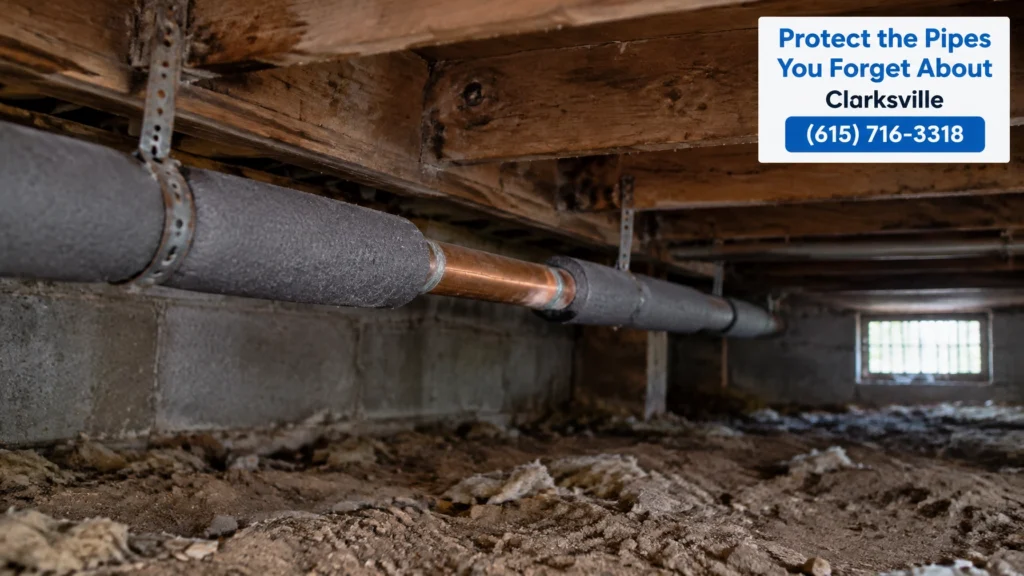
1. Find the pipes most likely to freeze
The first pipes to check are the ones farthest from warm indoor air. In Clarksville homes, that often means crawlspace supply runs, plumbing in garages, and pipes inside exterior walls beneath kitchen or bathroom sinks. A poorly insulated rim joist can leave a pipe exposed to cold air even when the rest of the house feels comfortable.
Walk the home and make a simple map of visible plumbing. Look under sinks on outside walls, along accessible crawlspace runs, and in garages with a water line. Notice details such as a foam sleeve that has gone brittle or a cold draft where a pipe enters the house. Don’t enter a crawlspace that feels unsafe or has standing water, exposed wiring, or damaged framing.
Clarksville’s median first hard freeze lands around mid November, but cold snaps can arrive earlier. The timing is a reminder to check before the first sharp drop, not a forecast for any particular year. For crawlspace moisture and access checks, see the fall crawlspace guide.
The outdoor faucet and main shutoff have their own checklists, so this guide stays focused on interior pipes. Use the separate guides for outdoor hose bib protection and testing the main water shutoff.
2. Insulate exposed runs and close cold air gaps
A snug foam pipe sleeve is a simple first step for an accessible, exposed run. Cover the full length you can reach, including bends and fittings where the product allows. Insulation slows heat loss, but it doesn’t create heat, so a long freeze can still put a vulnerable line at risk.
Also look where pipes pass through the floor, wall, or rim joist. A small opening can let cold air blow directly onto a line. Seal gaps with a material suited to the location, and don’t cover a connection or hide a leak you haven’t checked.
Heat tape may make sense for a pipe that remains exposed after other protection is considered. Choose a product approved for that pipe and location, then follow its instructions closely. Inspect the cord before use. Don’t use heat tape with cracked or damaged insulation, don’t overlap it, and don’t put insulation over or under it unless the manufacturer says that is permitted.
The American Red Cross guide to preventing and thawing frozen pipes covers pipe insulation and safe cold weather habits. Iowa State University Extension’s guide to protecting water from freezing also explains insulation and heat tape precautions.

3. Use a short routine on hard freeze nights
A few small habits can help keep pipes warmer during a cold snap. Open cabinet doors beneath sinks on exterior walls so room heat can reach the plumbing. Keep the thermostat steady overnight, and let a faucet served by an exposed pipe drip slightly during a hard freeze if needed.
Keep garage doors closed when plumbing runs through the garage. Check that the home stays heated, especially if a cold night follows a mild day and the pipes haven’t had time to warm back up. Move cleaners and other household chemicals out of reach before opening sink cabinets.
A homeowner in Sango might notice that the kitchen sink on an outside wall slows to a trickle during a sudden cold snap. Opening the cabinet and letting the faucet run lightly gives warmer air and moving water a chance to help. The key is to have checked that vulnerable pipe before the cold night arrives.

4. Respond carefully if a pipe freezes
A faucet that drops to a trickle or stops flowing can point to a frozen line. Check other faucets, too, and look for a new damp spot on garage drywall or a wet area beneath a sink. A pipe can split while frozen and begin leaking only after the ice starts to melt.
Don’t use an open flame to thaw a pipe. A torch or other flame can start a fire or damage the pipe and nearby materials. If the frozen section is easy to reach and there’s no sign of a leak, use gentle warmth only in a way that’s safe for the pipe and nearby surfaces.
If a pipe has burst, water is leaking, or the frozen section is hidden behind a wall, shut off the water if you can do so safely and get matched with a pro. Major plumbing repiping and burst pipe repair behind walls need the right specialist. Fix It Quick Network is a referral network, not a repair crew, and can help connect you with a vetted local pro.
5. Keep rental records and listing prep simple
A short pre freeze notice gives tenants clear steps before temperatures drop. Ask them to keep the heat on, open sink cabinets on exterior walls, keep the garage door closed if plumbing is present, and report a faucet that slows or stops. Give them a clear way to contact the property manager if a leak appears.
For each property, keep a brief walk checklist and record where exposed pipe runs are located. A photo and a note tied to the property address can save time during a turnover or an urgent call. In a rental near Fort Campbell, a manager might notice a bare line in the garage during a seasonal check. They can record its location, share the cold weather notice with the tenant, and arrange a pro match before the next freeze.
For realtors, a history of frozen pipes is a disclosure concern. Keep accurate records and check with the appropriate real estate professional about local disclosure requirements. A dry, insulated crawlspace also presents better than one with damp insulation or a musty smell. Around St. Bethlehem, Woodlawn, and the wider Montgomery County area, a quick documented check can make property handoffs clearer.
Costs depend on access, how much pipe needs insulation, whether gaps need sealing, and whether specialized plumbing work is involved. If you’d like help with a visible pipe concern, Fix It Quick Network matches homeowners, realtors, property managers, and investors with vetted local pros. The pros in the network are licensed and insured.
If you’d like a free match, call or text (615) 716-3318 or request one at /contact/. Note the property address and where you saw the exposed pipe. That’s a practical first step.
6. Frequently asked questions
Which pipes should I check first?
Start with exposed crawlspace supply runs, garage plumbing, and pipes beneath sinks on exterior walls. Check the rim joist and places where plumbing enters the home, too.
Are foam sleeves enough to prevent freezing?
They slow heat loss, but they can’t guarantee that a pipe won’t freeze during a long cold spell. Check for drafts and consider the full pipe location, not just the insulation.
Should I let a faucet drip during every freeze?
Not necessarily. During a hard freeze, a small drip can help protect a faucet served by a vulnerable exposed line. Open the nearby cabinet and keep the home heated as well.
What should I do if water stops flowing?
Treat a faucet that only trickles as a possible frozen pipe. Don’t use an open flame. If you see a leak or can’t safely reach the pipe, shut off the water if possible and get matched with a pro.
What should a rental property freeze checklist include?
Record exposed pipe locations, note visible insulation or gaps, and give tenants clear cold snap instructions and a way to report problems. Keep the notes with the property records.