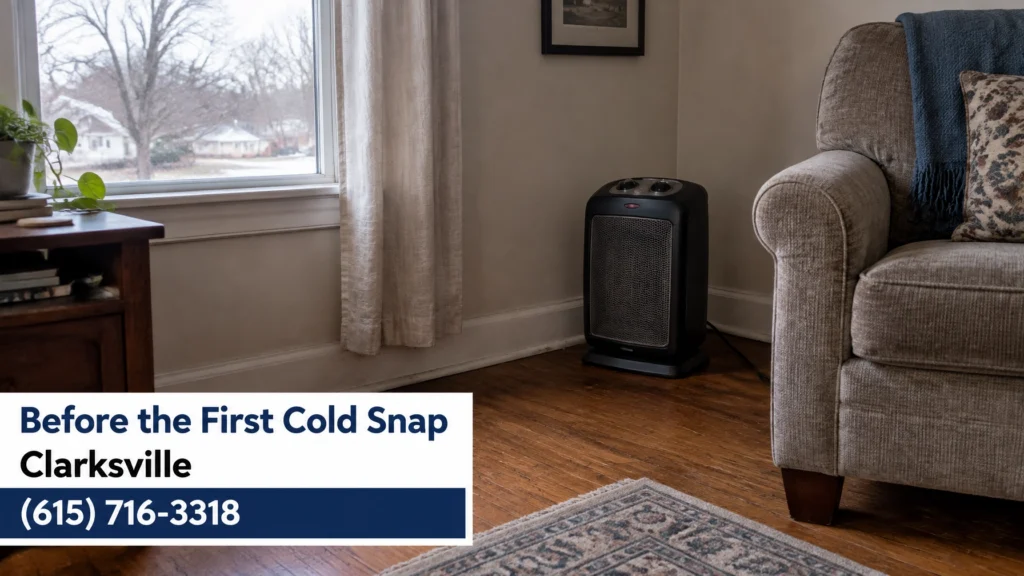
1. Why the first cold snap catches homes off guard
The first cold night can make a familiar house feel different. Central heat that kept up in October may seem weak once the temperature drops, especially in a spare bedroom, a room over a garage, or a converted space. In Clarksville, those rooms are often where someone first reaches for a portable heater.
Some older homes around Woodlawn and St. Bethlehem never had great heat distribution to begin with. A tenant may bring in a space heater when a room stays chilly, even if the main system is running. That can feel like a quick fix, but it’s worth checking the heater and the room before making it part of the daily routine.
You don’t need to assume the whole heating system has failed. Start with what you can see and feel. A cold room may have a simple airflow or draft issue, while a heater with a worn plug or damaged casing needs to stay unplugged.
2. Start with the heater itself
Look at the unit before blaming the house. Check for a cracked housing, a damaged cord, a dusty grille, or a tip over switch that no longer shuts the heater off. Don’t use a heater that’s damaged or behaving strangely.
Keep these basics in mind before plugging it in.
- Plug the heater directly into a wall outlet, never a power strip or extension cord.
- Keep anything that can burn at least 3 feet away.
- Turn the heater off when you leave the room or go to bed.
- Never use an oven as a heat source.
The U.S. Fire Administration reports that home portable heater fires were about 3 percent of home heating fires, but accounted for 41 percent of fatal heating fires. Its heating fire safety guidance also advises keeping combustibles three feet away and turning heaters off when unattended. In Tennessee, a cold room isn’t a reason to take shortcuts with a heater.
3. What the outlet and circuit are telling you
A heater can seem fine while the outlet is telling you to stop. Watch for a faceplate that feels warm, a discolored outlet slot, a plug that fits loosely, or a breaker that trips when the heater cycles on. Unplug the unit if you notice any of these signs, and don’t keep resetting a tripping breaker.
Treat the heater as the only high draw appliance on its circuit. Use one heater per circuit, and don’t connect power strips to one another. If you’re not sure what else shares the circuit, don’t guess by trying multiple outlets in the same room.
The extension cord and holiday lighting load have their own considerations. For that separate topic, see the guide to holiday lights and extension cord circuit checks. A safe heater setup starts with a sound outlet and a direct wall connection.

4. If the room still will not warm up, look at the envelope
A cold room doesn’t always need a bigger heater. Feel for a draft near a door or window, check whether the filter is clogged, and make sure furniture isn’t blocking a register. A thermostat on an interior wall across from a lamp can also read warmer than the rest of the room and leave you wondering why the space still feels chilly.
These are practical repair items to address before buying more heating equipment. A drafty door may need an adjustment or better weatherstripping. A blocked register just needs clear space in front of it, and a dirty filter may need replacing according to the system instructions.
In Sango, as in other parts of Clarksville, it helps to compare how the room feels with what the thermostat says. Don’t raise the setting over and over without checking the simple things first. A little attention to airflow and drafts can make a room more comfortable without adding another appliance.

5. What property managers and investors should check between tenants
A turnover is a good time to check what heating equipment is already in the unit. Look for heaters left by a previous tenant, check that any supplied unit is in sound condition, and put a clear written policy in place for tenant supplied heaters. Also consider whether the room’s outlet and circuit can carry the load safely.
In a rental near St. Bethlehem, a tenant’s heater was plugged into an extension cord behind a sofa, and the outlet faceplate felt warm during a walkthrough. That’s a reason to stop using that setup and have the outlet checked before the next cold night.
Check that smoke and carbon monoxide alarms work, and note any heater or outlet concerns in the property record. Include the date, the room, what was observed, and whether follow up is needed. Older rentals near Fort Campbell and in rural Montgomery County may need a closer look, especially if past maintenance notes are thin. Clear records make the next turnover easier to manage.
6. What a pro checks and when to get matched with a pro
If the outlet feels warm, the breaker trips, or the room remains cold after basic checks, it’s time to have the right person look closer. An electrician can assess the outlet and wiring and determine whether a dedicated outlet or circuit makes sense. A heating specialist can check thermostat operation and service the central system.
For seasonal heating checks, see the guide to fall heating system checks. A basic outlet repair may cost in the low hundreds, while adding a dedicated circuit can range from several hundred dollars to over $1,000. A heating service visit may fall roughly between $100 and $300 before parts or repairs. These are general ranges, not firm quotes. Access, diagnosis, parts, and local rates affect the cost.
Fix It Quick Network is a referral network, not a repair crew. We can match you with a vetted local pro, and the pros in our network are licensed and insured. Big electrical or HVAC work is pointed to the right specialist. If you’d like help, call or text (615) 716-3318 or request a free match. Start by noting the room, the heater or system involved, and what you noticed.
Frequently asked questions
Can a space heater run overnight?
No. Turn it off when you go to bed, as well as whenever you leave the room. Keep the area around it clear while it’s in use.
Is it safe to plug a space heater into a power strip?
No. Plug the heater directly into a wall outlet. Don’t use a power strip or extension cord.
What should a homeowner do if the outlet feels warm?
Stop using the heater and unplug it if it’s safe to do so. Have the outlet checked, especially if you also see discoloration or the breaker trips.
Why does one bedroom stay cold when the heat is on?
A draft, blocked register, dirty filter, or thermostat location can affect how warm the room feels. Check those simple things before turning to a larger heater.
Should a landlord allow tenant supplied space heaters?
Set a clear written policy and consider the room’s outlet, circuit, and heater condition. Make sure working smoke and carbon monoxide alarms are in place.
Is an oven ever a safe way to warm the house?
No. An oven is not a home heating source. Turn to a safe heating option and have a persistent heating problem checked.