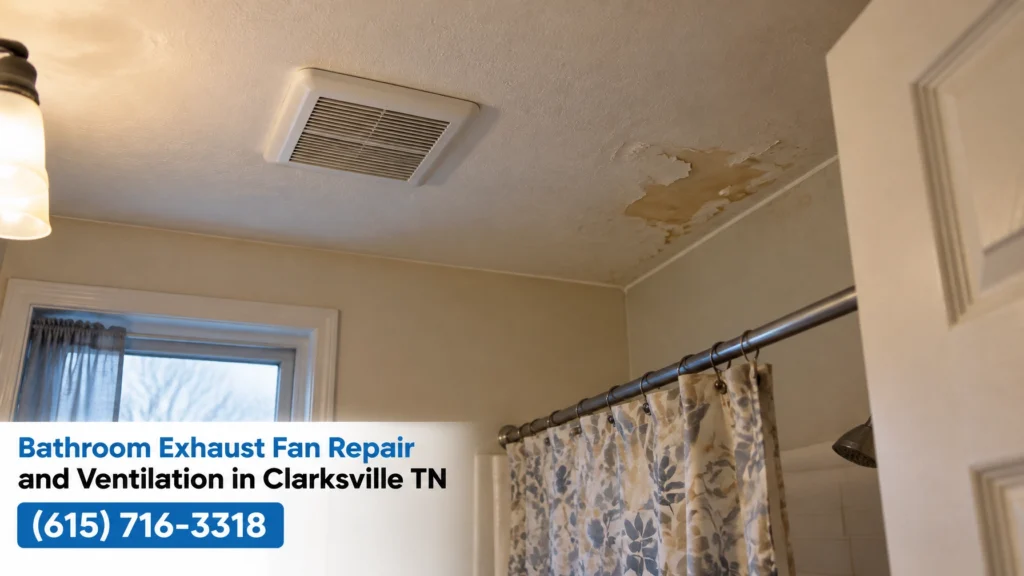
A bathroom fan can sound busy and still move very little air. If the mirror stays fogged, the room feels damp long after a shower, or a musty smell keeps returning, the fan or its vent path may need attention.
Bathroom exhaust fan repair in Clarksville TN can be as simple as clearing dust from a grille or as involved as replacing a fan and fixing a blocked duct. The important part is finding where the airflow stops before covering up moisture damage.
Fix It Quick Network is a referral network, not a repair crew. We connect homeowners, realtors, property managers, and investors with vetted local pros. The Network does not perform repairs or set the pro’s price.
1. Notice what the bathroom is telling you
Weak airflow usually leaves clues. The mirror may stay fogged, the air may feel heavy after a shower, or a musty smell may return even after the room has aired out. Peeling paint near the ceiling and a dark stain creeping across the corner above the shower can also point to repeated moisture.
Listen when the fan runs. A rattling grille, scraping sound, or sudden change in pitch may mean a part is loose or the motor is wearing out. A fan that runs quietly is not automatically working well, though. Dust, a stuck damper, a damaged duct, or a fan that is too small can all limit what reaches outdoors.
In Clarksville and Montgomery County, bathrooms may stay closed up for long stretches as fall weather shifts. Pay attention to changes after the heat comes on and windows stay shut. For a broader look at fall indoor humidity checks for local homes and rentals, compare the bathroom symptoms with how the rest of the home feels.
2. Try a simple airflow check
A tissue can give you a rough first read. With the fan switched on, hold a small piece of toilet paper near the grille. If it barely moves or falls away, airflow may be weak. This isn’t a measurement, and it won’t tell you whether the problem is in the fan, duct, or exterior vent.
Check that the fan is actually switched on. In some bathrooms, the fan is connected to the same switch as the light. In others, it has its own switch that’s easy to overlook. If the fan only runs with the light, it may get switched off before the room has cleared.
Don’t use a flame to test airflow. Keep your hands and objects away from the fan opening, and don’t remove a grille if you’re unsure how it comes off. A quick check can help describe the symptom, but it doesn’t replace a proper inspection.
If the fan runs during a shower and the mirror still fogs for a long time, that’s useful information to share with a pro. Note how long the fan runs and whether the door is usually closed.

3. Clean the grille before replacing the fan
Dust can choke off airflow before the fan itself has failed. Look for a grille packed with lint and dust, especially between the slats. In a Sango home, a resident noticed the fan sounded normal but the tissue test showed almost no pull. Dust covering the grille was the first visible issue, though the duct still needed checking afterward.
If the grille can be removed easily, switch the fan off first and follow the manufacturer’s directions. Clean it with a vacuum brush or a soft cloth. Some models also allow access to the blade for careful cleaning, but don’t tug on wiring or touch electrical parts.
Put the grille back securely and try the airflow check again. Cleaning may be enough when the fan runs steadily, the blade is clear, and the airflow improves. A new grille can help if the old one is cracked or won’t stay in place, but it won’t fix a blocked duct or a weak motor.
If cleaning doesn’t change the airflow, don’t keep scraping or reaching into the housing. The next step is to find out whether the fan, duct, or outside vent is restricting the air.
4. Check the duct path, not just the fan
The fan needs a clear route to the outdoors. A duct that ends in the attic sends warm, damp bathroom air into the house instead of outside. A crushed, sagging, disconnected, or excessively long duct can also cut airflow and let moisture build up where you can’t see it.

Don’t assume an attic vent is an outside vent. The duct should connect to a suitable wall or roof termination, with an exterior cap that opens for exhaust and closes against backdrafts.
A duct inspection can require attic access, careful footing, and work near wiring or insulation. Don’t step between framing members or move damp insulation to investigate. If the route is disconnected, crushed, or not vented outdoors, get a vetted pro to inspect it. A new duct run or attic work may be beyond a small handyman repair and should go to the right specialist.
For related moisture checks below the home, see the guide to fall crawlspace moisture checks in Clarksville homes and rentals. Crawlspace symptoms have different causes, but keeping notes on odors and damp areas can help a pro understand the bigger picture.
5. Make sure the fan suits the room
A fan that’s too small for the bathroom may run for a long time without clearing the moisture. Room size, ceiling height, duct length, bends, and the outside vent all affect how much air the fan can move in real conditions. The number printed on a fan isn’t the whole story.
A useful starting point for sizing is the room’s volume. A common ventilation guideline aims for about eight air changes per hour, which works out to roughly one cubic foot per minute for each square foot of floor area in a room with an eight foot ceiling. A small powder room and a large primary bath won’t have the same needs.
A pro can compare the room, duct, and fan rating to see if the fan is undersized or simply struggling against a restrictive vent path. In St. Bethlehem, an owner may notice the mirror clears in a smaller hall bathroom but stays fogged in a larger primary bath. That difference can point to room size or duct conditions, not necessarily a bad switch.
If you’re also seeing a leak or weak flow at a shower fixture, the shower head repair guide covers that separate issue. A fan won’t fix a plumbing leak, and a shower head repair won’t improve ventilation.
6. Use a control that keeps the fan running
The fan needs to run long enough to clear moisture. A light switch can make that easy to forget, especially when everyone wants the room dark after leaving. A timer lets the fan continue for a set period, while a humidity sensing switch can respond to damp air.
A timer or sensor may be worth considering if the fan gets switched off too soon or the household has different habits. The switch and wiring need to be checked as part of the change. Bathroom fan wiring, circuit, and switch work is a licensed electrical task, not a do it yourself step for anyone unsure about electrical safety.
The pros in our network are licensed and insured. A vetted pro can check whether the existing circuit, switch, and fan are a suitable match, then explain options and cost before work begins. Don’t open a switch box or handle wires to troubleshoot a fan.
If a fan runs only with the light, mention that when asking for help.
7. Know when cleaning is enough and when replacement makes sense
Cleaning is a reasonable first step when the fan still runs, the grille is dusty, and the airflow improves after the dust is removed. A replacement grille may be enough if the old one is broken or loose. Neither step will address a motor that’s failing or a duct that’s blocked.
A fan replacement may make sense when it rattles after cleaning, stops and starts, or moves very little air despite a clear route outside. Noise can also come from a loose grille or mounting issue, so replacing the unit before checking those basics may not solve the problem. A pro can inspect the housing and duct to narrow down the cause.
Replacement involves electrical connections and the fan’s mounting, so it’s a licensed electrical task for a vetted pro. A like for like fan may be straightforward when the opening, wiring, and duct are in good condition. A different size, added timer, new humidity sensor, or damaged duct can add work.
In Fort Campbell rental properties, logging a noisy fan or a mirror that stays fogged during turnover gives the owner a chance to address the problem before the next tenant moves in. A short note and a photo of the grille can help explain the condition.
8. Take moisture signs seriously without guessing at mold
Ventilation helps carry shower moisture outdoors. When it doesn’t, damp air can contribute to peeling paint, recurring mildew, and damage to ceilings or nearby materials. A split caulk line along the tub edge or a soft spot near the tub is also worth noting, but it may have more than one cause.
Don’t paint over a stain or seal over soft drywall before the source is understood. A dark patch may relate to a fan or duct problem, but a plumbing leak or another source of water is possible too. For a mark on a ceiling, the guide to water stains on Clarksville ceilings explains why the water source needs attention before the finish.
If you see visible mold growth, recurring dampness, or damaged material that feels soft, avoid scraping or disturbing it. Mold and mildew concerns, along with moisture damage or a duct issue beyond a handyman’s scope, should go to the right specialist. The Network can help point customers toward the appropriate type of pro.
9. Plan repairs for rentals and pre listing
A bathroom fan can be easy to miss during a quick turnover. Run it, listen for rattling, and check whether the mirror clears after a normal shower. Note any musty odor, ceiling stain, peeling paint, split caulk, or soft drywall rather than assuming a cosmetic touch up is enough.
Property managers can record the room, date, fan behavior, and visible moisture signs for each address. Owners in Woodlawn can include the bathroom in a broader seasonal check, especially if tenants have mentioned lingering dampness. The same notes help investors compare needs across more than one property.
For sellers preparing a home, working fan ventilation and clean, dry bathroom surfaces make it easier to show the space honestly. The pre listing repair checklist for Clarksville home sellers can help organize this alongside other visible repairs. A fan that needs replacement or a duct that ends in the attic should be assessed before paint or caulk hides the clues.
10. Understand the planning cost and choose the next step
Costs depend on the actual cause, the condition of the fan and duct, ceiling height, access, and whether electrical work or a new vent route is needed. A simple visit for cleaning and resealing, or cleaning the grille and blade, may run roughly 150 to 350 dollars. A fan replacement with a like for like unit may run roughly 250 to 600 dollars, depending on access, ceiling height, duct condition, and whether a new switch, timer, or humidity sensor is added.
These are general planning ranges only, not quotes. A new duct run or attic work adds cost, and the Network does not set the pro’s price. The matched pro reviews the condition and explains the scope and cost.
Fix It Quick Network is a referral network. We can match you with a vetted local pro for bathroom ventilation, whether you own the home, manage a rental, or are getting a property ready to sell. The pros in our network are licensed and insured, and specialty moisture or mold concerns can be directed to the right specialist.
If you’d like a free match, call or text (615) 716-3318 or request one online. Start with a photo of the grille and a note about how long the mirror stays fogged.
Frequently asked questions
How long should a bathroom fan run after a shower
Let it run long enough for the room to clear. A timer can keep it on after you leave, and a pro can help choose a control that fits the bathroom and wiring.
Why does the mirror stay fogged when the fan is running
The grille may be dusty, the duct may be blocked or disconnected, or the fan may be too small for the room. A tissue check can suggest weak airflow, but it won’t identify the cause.
Can a bathroom fan vent into the attic
No. Bathroom exhaust should reach the outdoors through a suitable exterior vent. Air discharged into an attic can add moisture where it may damage building materials.
Is a noisy fan always ready for replacement
No. A loose grille or dust buildup can cause noise. If cleaning and checking the grille do not help, have a pro inspect the motor, mounting, and duct path.
Can a homeowner replace a bathroom exhaust fan
Fan replacement involves electrical connections. It’s a licensed electrical task, so use a vetted pro rather than opening wiring or a switch box yourself.
Does a ceiling stain mean the fan is the problem
Not necessarily. A stain may be connected to ventilation, a plumbing leak, or another source of water. Identify the source before repairing or painting the ceiling.