1. Start with the carpet, not the replacement quote
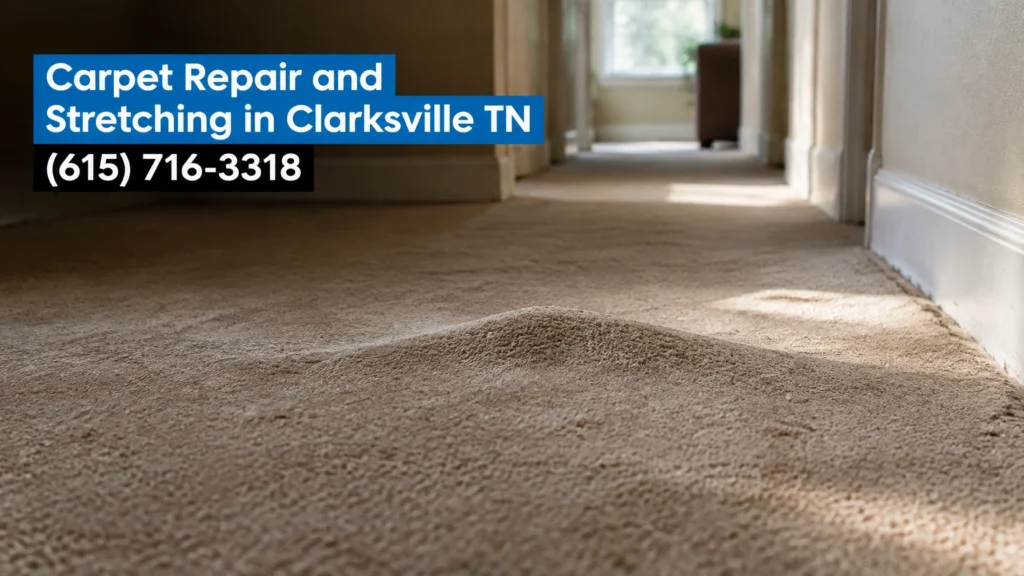
A ripple in the hallway does not automatically mean the carpet is done. In many cases, carpet repair in Clarksville TN starts with finding out why the carpet has gone loose. A raised ridge underfoot, a split seam at a bedroom doorway, or an edge that no longer stays tucked can often be checked before anyone talks about replacing the whole room.
Walk the area slowly and note where the carpet feels loose or uneven. Does the ripple run across a doorway, follow a walking path, or appear near a wall? Check whether the carpet edge is pulling away from a threshold or whether the seam is opening. Those details help show whether the issue is tension, wear, or something underneath.
A single ripple can still be a trip concern, especially in a busy hallway. You don’t need to pull up the carpet to inspect it. Start with what you can see and feel, and keep the furniture where it is until you know whether the area needs a closer look.
2. Notice what can make carpet wrinkle
Carpet wrinkles usually mean the carpet has lost tension or the layers below it need attention. An installation that wasn’t stretched firmly enough can loosen over time. Heavy furniture dragged across the room, aging materials, and movement at the floor can also contribute.
Indoor conditions can play a part. Changes in humidity may affect carpet backing, especially after wet cleaning or a period of damp indoor air. The fall humidity checks for Clarksville homes offer a useful cross-check if the home has also felt unusually damp or dry.
Look at the carpet in relation to the floor beneath it. A soft or uneven spot may point to a separate issue, not just loose carpet. If the floor feels changed underfoot, the crawlspace moisture guide for Clarksville homes and wood rot repair guide can help you understand why the subfloor deserves attention. Don’t stretch carpet over a soft or damaged surface.
3. Know what a restretch involves
A proper restretch pulls the carpet tight across the room and secures it again at the edges. A pro will usually inspect the carpet, seams, padding, tack strip, and floor before deciding whether stretching is suitable. If the carpet is worn out or the backing is breaking apart, more tension won’t solve the underlying problem.
The work may involve moving furniture, detaching one or more carpet edges, stretching the carpet, trimming excess, and tucking it back into place. A power stretcher is generally used to create even tension across a larger area. A knee kicker can help position carpet in a limited spot, but it isn’t a substitute for properly stretching a room.
Carpet stretching in Clarksville TN may be combined with seam repair if the carpet has split where two sections meet. The cause matters. If a seam keeps opening because the carpet is loose, closing it without correcting the tension may only lead to the same problem again.
Before agreeing to a repair, ask what the pro found and which parts are included. A clear explanation helps you compare a restretch with replacement without guessing.
4. Check edges, doorways, and stairs with care
Edges often show trouble before the center of the carpet does. At a doorway, look for carpet pulling free from a metal threshold strip. If the tack strip is visible, don’t press the edge back down with your foot. The small nails that hold carpet in place can be sharp, and a loose strip may need replacement.

Doorway edges may need resecuring, a new tack strip, or a repair to the seam or transition. The entryway and mudroom repair guide covers other issues that can show up around a threshold.
Stairs need extra care. Carpet that is loose at a stair nose or landing can create a fall risk, and the repair can involve several edges and tight turns. If the carpet shifts when you step, keep people off that section as much as you can while arranging an assessment. Squeaks beneath carpet are a separate clue. The squeaky floor guide can help with that cross-check, but floor movement and loose carpet may need different repairs.
5. Look at the padding and tack strip too
Carpet doesn’t sit directly on the floor. Padding gives it a softer feel, while tack strip around the room’s edges helps hold it in place. If the padding is uneven, crushed, too soft, or damaged, the carpet may ripple again after stretching. A strip that’s loose, missing, or worn may fail to grip the carpet.
A crushed pile path in front of a recliner can look like a tension problem, but flattened fibers alone don’t always mean the carpet needs stretching. Check whether the surrounding carpet moves or bunches when you walk across it. A worn path may be ordinary pile wear rather than a loose installation.
Carpet seam and edge repair should account for what’s underneath the visible surface. A pro may need to inspect the padding near a seam or check whether the tack strip still holds. If a seam keeps splitting, the padding feels lumpy, or the carpet edge won’t stay put, ask what’s causing it before settling on a quick surface fix. Repairing only what you can see may not hold if the support below is the real issue.
6. Keep DIY checks small and safe
You can do a little preparation without trying to stretch the carpet yourself. Move light items off the affected area if that’s easy, and clear a closet if the pro needs access to that edge. Take a photo of the ripple or split seam, and note when you first noticed it.
Lifting a loose corner gently may help you see whether the edge is detached. Stop if you see exposed tack strip, feel a sharp point, or find the carpet stuck firmly in place. Don’t pull the carpet across the room, cut the backing, or drive nails through the surface to flatten a ridge.
A DIY attempt can create uneven tension or damage the carpet backing. That can make a later repair harder. You don’t need special tools or a deep inspection to request help. A few clear photos and a simple description of where the carpet moves are a good start.
For routine daily home repairs, small preparation can help a visit go smoothly. The repair itself is best left to someone who can check the carpet, padding, tack strip, and floor together.
7. Match the repair to the property
The right choice can differ from one home to another. A homeowner may want to keep older carpet going in a guest room. A property manager may need to address a loose edge between tenants, while an investor may compare repair costs across several units before deciding where replacement makes sense.
Picture a home in St. Bethlehem with a ripple running across the hall and a split seam near a bedroom doorway. The owner has a showing coming up, so the practical first step is to find out whether a restretch and seam repair are enough, rather than assuming every room needs new carpet.
For sellers, visible carpet problems can affect how a room feels during a showing. The pre-listing repair checklist for Clarksville home sellers can help put carpet alongside other visible repairs. In Sango, Fort Campbell, and Woodlawn, rental owners may also want to record each room’s condition during turnover. Clear notes make it easier to plan repairs at one property or several.
8. Plan for cost without treating ranges as quotes
Carpet repair costs depend on how much carpet is loose, how many edges or seams need work, and whether the materials below are still in good shape. A small-area restretch and reseam may run roughly $150 to $400. That range can change with room size, furniture, access, carpet type, and local minimum charges.
A larger restretch or partial replacement may run around $1 to $3 or more per square foot, often with a minimum charge. These are general planning ranges only. Padding, tack strip, or subfloor work adds cost. Stairs, extra seams, older carpet, and moving heavy furniture can also affect the total.
If carpet replacement planning in Clarksville TN is on your mind, compare the area that needs work with the age and condition of the rest of the carpet. A small repair may make sense when the backing is sound and the color match is acceptable. If the pile is badly worn throughout or the backing is failing, replacement may be the better long-term plan. Ask for a written estimate that explains what is included and what would change the cost.

9. Know when to get matched with a pro
Get matched with a pro when ripples come back after stretching, a seam keeps splitting, or the carpet is loose at stairs or landings. The same applies if the carpet is wet, the padding is soaked, or the subfloor feels soft. Those clues call for more than a surface adjustment.
Water damage, subfloor rot, mold, and full carpet replacement should go to the right specialist. A carpet pro can identify whether the carpet itself is repairable, while moisture or structural concerns may need a different specialist. The pros in our network are licensed and insured.
Fix It Quick Network is a referral network, not a repair crew. It does not perform the work itself. For help finding a vetted local pro for carpet repair in Clarksville or Montgomery County, call or text (615) 716-3318 or request a free match online. Share the room, the carpet condition, and any soft spots or loose edges that stand out. That’s a practical next step.
10. Frequently asked questions
Can a wrinkled carpet be stretched instead of replaced?
Often, yes, if the carpet backing is in sound condition and the padding and tack strip can support it. A pro should inspect the material before recommending a restretch.
Why does carpet ripple again after stretching?
The original cause may still be present. Loose tack strip, worn padding, an uneven floor, or backing that is failing can make the carpet loosen again.
Is loose carpet at stairs a safety concern?
It can be. Loose carpet at a stair nose or landing may shift underfoot, so limit use of the area and arrange an assessment.
Does a small split seam always mean the whole room needs new carpet?
No. A small seam may be repairable if the surrounding carpet is in good shape. If the seam keeps opening or the backing is damaged, replacement may be worth considering.
Can carpet be stretched if the subfloor is soft?
The soft area should be checked first. Stretching over a damaged or unstable subfloor won’t address the cause and may not hold.
Does a crushed pile path mean the carpet needs stretching?
Not always. Flattened fibers in a walking path can be ordinary wear. If the carpet around the path also bunches or shifts, tension or padding may be part of the problem.