1. Identify what the screw is doing
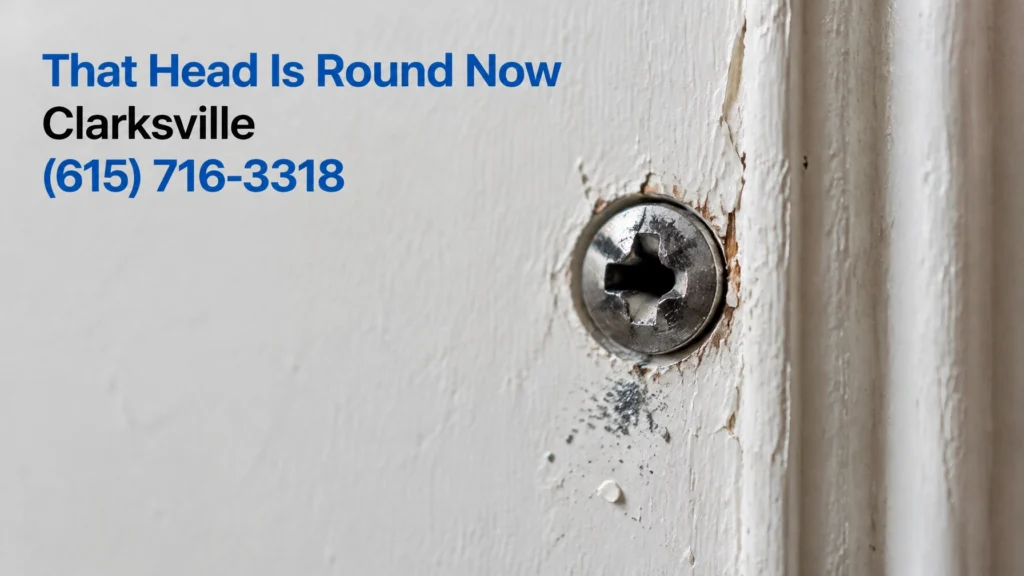
Start by figuring out how the screw is stuck. A rounded head usually slips under the driver. The Phillips cross may look like a smooth cone, with the black oxide rubbed off around the center. A spinning screw turns without rising, which often means the wood threads have lost their hold. A seized screw stays put, sometimes with rust gathered around the head or hinge plate.
Those are three different problems, so one forceful approach won’t solve all of them. In Clarksville homes, painted trim can hide a head that’s already worn down, while older hardware in Montgomery County may have rust or paint bonding it in place. Fine metal dust and paint chips on the trim below the head are a useful sign that the bit has been slipping.
If the screw holds a heavy door or another load, support that weight before loosening anything.
2. Try the low risk moves first
Begin with the right size driver bit. It should fit snugly in the screw head without rocking. Press straight down, then turn slowly by hand. If the screw is stuck, try tightening it just a fraction first, then loosen it. That small movement can break the grip without chewing up the head.
For a lightly rounded head, place a wide rubber band between the bit and the screw. Press down firmly and turn slowly. It may add enough grip to get the screw moving, but stop if the bit keeps slipping. On a rusted screw, place a small amount of penetrating oil at the head and around the shank, then give it time to work. Keep oil off finished wood and follow the product directions.
Fasteners can strip on furniture too, especially after repeated tightening. For a wobbly chair or table, see how to fix a wobbly chair or table in a Clarksville TN home.

3. Make a new grip only when needed
If the head is too chewed up for a driver bit, the next step may be cutting a slot across it. A small hacksaw can make a straight groove in a screw head that’s easy to reach. A rotary tool can do the same, but it needs a careful hand and eye protection. Keep the cut shallow and avoid touching the surrounding wood or finish. Then try a flathead screwdriver that fills the new slot.
This is a more aggressive move, so don’t start here. If the screw sits close to glass, delicate trim, or a painted door surface, the cutting wheel can slip and cause damage. The guide to replacing a door knob in a Clarksville TN home can help with the hardware context.
A screw extractor or a left hand drill bit may help if the slot doesn’t work. Keep the drill straight and use low speed. Drilling out the screw is the last resort because a wandering bit can enlarge the hole or damage the hinge.
4. Lift a spinning screw out of wood
A screw that spins freely may have lost its grip in the wood. Keep gentle outward pressure under the head while turning it counterclockwise. A thin, stiff blade can help lift the head, but protect the surface and don’t lever hard against the cabinet. If the screw begins to rise, continue slowly so it doesn’t bind or snap.
A St. Bethlehem turnover example shows why more force doesn’t always help. A cabinet hinge screw spun in place after several tries with a larger bit, but the head never lifted. The clue was the loose hole in the cabinet wood, not a need for an even bigger driver.
Once the screw is out, the hole may need a glued dowel plug before a fresh pilot hole is drilled. Another option is to move the hinge slightly and make new holes, if the layout and cabinet allow it. For more on stripped hinge screw holes in cabinets, consider the hinge and door alignment as well as the fastener. Don’t force a screw back into a hole that no longer holds.

5. Protect the surface and know when to stop
A slip can scratch a door, dent a hinge plate, or chip paint around the screw. Put painter’s tape around the head before trying a driver. If the screw is in a hinge, slide a piece of scrap cardboard behind the plate to protect the nearby surface.
Stop if a crack starts spreading in cabinet particleboard. That material can crumble rather than hold a new screw, especially if the hole has been worked repeatedly. Be careful around glass in a storm door too.
In Sango, an old hinge can look like a simple hardware fix until the paint, rust, and wood all begin to give way together. If you’re preparing a home for a showing or managing a rental near Fort Campbell, avoid turning one stuck fastener into trim or glass damage. A calm pause is sometimes the best next move.
6. Know when to get matched with a pro
Some screws aren’t a good DIY test. Seized structural bolts, screws in a glass door frame, and hardware that carries a heavy door call for extra care. Stop if a hinge has already been repaired twice or if particleboard feels soft and crumbly around the screw.
The cost to remove a damaged screw can vary with its material, access, corrosion, and the condition of the surrounding wood. A screw that comes free with a careful grip is different from one that needs extraction and a cabinet hole repair. If the screw is part of a larger structural or specialty repair, the right specialist may be needed.
For homeowners in Clarksville and Woodlawn, or realtors and property managers facing a closing or turnover deadline, it’s reasonable to hand off a fastener that risks damaging the surrounding surface. The pros in our network are licensed and insured. The Network can match you with a vetted local pro who can assess the screw and the repair around it.

If you’d like help, call or text (615) 716-3318 or request a free match. You choose whether to try the low risk steps first or ask for a pro. Before starting, take a clear photo of the damaged head and the area around it.
FAQ
Can a rubber band remove every stripped screw?
No. It may help with a lightly rounded head, but it won’t fix a screw that spins in a stripped wood hole or one seized by heavy rust. Stop if the bit continues to slip.
Should penetrating oil go on a cabinet screw?
Use a small amount only if the screw is rusted, and keep it off finished wood. Follow the product directions and allow time for it to work.
How can a spinning screw come out of wood?
Apply gentle outward pressure under the head as you turn it counterclockwise. If the hole has lost its grip, the wood may need a glued dowel plug or a new hinge position.
Is drilling out a stripped screw a good first step?
No. Drilling can damage the wood, hinge, or finish if the bit wanders. Try the less aggressive methods first, and use an extractor only if you can keep it straight.
When should a homeowner stop and get matched with a pro?
Stop if the fastener is near glass, supports a heavy door, or sits in soft, crumbling material. A screw that has resisted several careful attempts is also a good reason to pause.