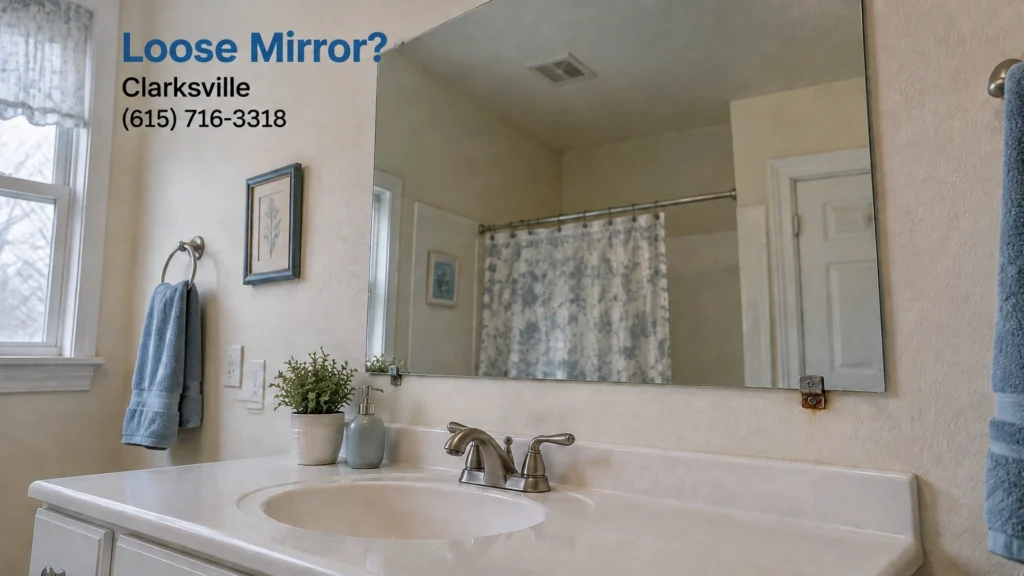
A mirror that shifts when you touch it can make a bathroom feel less safe, even if the glass isn’t cracked. Here’s the deal, the fix may be as simple as replacing a loose clip, or it may involve checking the wall behind the mirror or vanity.
1. Know what the problem looks like
A failing mount often gives you small clues before anything comes loose. The mirror may tilt a little, rattle when a door closes, or leave a widening gap between the glass and the wall. You might also spot a rusted clip, a screw head pulling away, or a thin crack in the paint near a mounting point.
Vanity hardware has its own warning signs. A cabinet may shift when you open a drawer, or the gap between the vanity and wall may change. A soft spot near the sink or a line of split caulk can point to moisture, not just a loose screw.
Don’t push or pull on a mirror to test it. If it’s visibly moving, keep people clear of the area and avoid using the sink right beneath it until you know it’s secure. A little caution feels sensible. You don’t need to panic.
2. Check the easy things first
Start by looking, not tightening. Check whether the mirror has visible clips, a lower support channel, or a frame with mounting points. Look for missing hardware, rust, a cracked plastic fitting, or a screw that’s backed out. If a clip is loose, don’t assume the screw is the only problem. The anchor behind it may have shifted or damaged the drywall.
For a vanity, open the cabinet doors and look inside at the fasteners along the back or side. Check whether the cabinet itself moves, or whether only a door or drawer is loose. A loose handle is a different fix from a vanity pulling away from the wall.
Quick tip, take a photo of the hardware and note where it sits before removing anything. Don’t lift or reposition a heavy mirror by yourself. That’s a lot of glass to manage, and a second set of hands is the safer choice.

3. Understand how mirrors and vanities attach to the wall
The mounting method matters. A frameless mirror may rest on lower clips and be held in place by upper clips. Other mirrors use a continuous channel, a frame, or a manufacturer’s hanging bracket. The hardware needs to suit the mirror’s size and weight, as well as the wall behind it.
A vanity is usually fastened through its cabinet back or mounting rail into wall studs or suitable anchors. It may also meet the wall with caulk, but caulk isn’t what keeps the cabinet attached. If the vanity is shifting, look for failed fasteners or a damaged wall rather than treating the caulk as the main support.
If you can see a product label or still have the installation instructions, check the manufacturer’s mounting guidance. CPSC’s wall anchor safety information is also useful background on choosing proper support. A mounting system should hold the load, not just cover a hole.
4. Match replacement hardware to what you have
A replacement clip that looks close may not fit the glass thickness or mirror style. Check the mirror’s instructions if available, and compare the new hardware with the old piece before taking anything apart. Some clips hold the glass edge, while others are designed for a specific frame or channel.
Pay attention to the wall type too. Drywall, plaster, tile, and masonry each call for different fasteners. A screw that works in a stud won’t provide the same support if it’s only biting into soft drywall. Don’t use adhesive strips or general-purpose glue as a substitute for proper support unless the mirror maker specifically approves that method for the mirror and wall.
For vanity hardware, check whether the original fastener is missing, too short, or no longer gripping solid material. Save removed pieces and note their locations. That makes it easier to identify a compatible replacement without guessing.
5. Keep repair work within safe limits
A small cabinet knob or door hinge can be a reasonable DIY adjustment. A heavy mirror that’s tilting, loose, or mounted above a sink is different. Don’t remove its clips or try to catch and reposition the glass on your own. If it looks unstable, keep the area clear and get help handling it safely.
Don’t over-tighten mirror clips against the glass. Too much pressure can stress the edge, especially if the hardware is the wrong size. If the mirror has a crack, chipped edge, or damaged backing, leave it in place if it’s stable and arrange a safe inspection.
Check for product recalls if the mirror is a lighted model or has a specific brand and model number. A recall may relate to the attachment system, not just the mirror’s appearance. If you’re unsure, that’s a good point to pause. No need to turn a small loose fitting into a bigger problem.

6. Deal with hollow wall anchors and stud placement
A screw that spins without tightening often means the anchor has failed, or the hole has grown too wide. Don’t keep turning it. That can crumble the drywall around the hole and leave the mount with even less support.
For a mirror or vanity, the right attachment depends on the weight and the wall construction. A stud or solid backing can provide a secure fastening point. If the mounting location doesn’t line up with a stud, an appropriate anchor may work, but it must be rated for the load and installed as directed. A random plastic plug isn’t a safe guess for heavy glass.
If you can’t tell where the studs are or what’s behind the finish, stop before drilling. Electrical wiring or plumbing may be inside the wall, especially around a vanity. In a Fort Campbell-area home, as elsewhere, older repairs or added wall layers can make the layout less obvious than it looks.
7. Address moisture damage behind the mirror or vanity
Water can weaken the wall long before the damage is easy to see. Look for a cloudy moisture stain, peeling paint, swollen cabinet edges, or soft drywall crumble near the sink. A musty smell inside the vanity is another reason to check for a leak or trapped dampness.
In a Sango bathroom, picture a mirror that has started to lean while the paint at its lower corner is bubbling. The clip may be loose, but the stain and soft wall could mean moisture has weakened the area behind it. Fixing the mounting point without finding the source can leave the same problem waiting underneath.
Don’t cover a damp patch with fresh caulk or paint. Check for a dripping faucet, a loose drain connection, or water escaping around the sink. If the wall or cabinet framing is damaged, a pro can assess what needs to be opened and repaired. For ventilation concerns, see the bathroom exhaust fan guide.
8. Test one thing at a time
Once the mirror or vanity is secure and any moisture issue is understood, check the result gently. Look for movement at the mounting points, new gaps, or a returning rattle. Don’t hang weight from the mirror or tug hard to “make sure” it’s solid.
For a vanity, open and close the doors and drawers normally. Watch whether the cabinet shifts or the hardware loosens. If the whole unit moves, stop using it as a handhold. A vanity isn’t a grab bar, and repeated pulling can strain the fasteners.
Keep an eye on the area over the next few days. If a screw backs out again or a stain returns, there may be a larger issue behind the wall. Clarksville’s changing humidity can make damp bathroom surfaces feel slow to dry, so steady ventilation matters. A thermostat issue can also affect comfort and indoor conditions, and the thermostat guide covers what to check there.
9. Notice related problems elsewhere
A loose mirror may be the only issue, but it’s worth noticing what else is happening nearby. Check the vanity top for a gap, look at the backsplash caulk, and see whether cabinet doors sit evenly. A swollen cabinet side or a soft floor near the tub can point to a separate water problem that deserves attention.
If you’re already checking your home, notice whether other fixtures have similar signs of wear. A rattly bathroom fan or a slow drip under the sink may not be connected to the mirror, but both can affect comfort and moisture. Don’t assume everything needs replacing. Just note what you see.
For homeowners in St. Bethlehem and across Montgomery County, a simple written list can help separate one small repair from several unrelated ones. Include where the problem is, when you first noticed it, and whether it’s getting worse. That gives a local pro a clearer starting point.

10. Plan for cost without treating a range as a quote
The cost depends on what’s loose and what’s behind the finish. Replacing a small fitting or remounting a mirror where the wall is sound commonly falls in a few hundred dollars or less. A larger mirror, hard-to-match hardware, careful removal, or work around tile can add time.
If the wall has water damage, the job may include opening the area, replacing damaged material, and securing the vanity or mirror to sound backing. That kind of work can run from about $500 to $1,500 or more, depending on how much framing or finish needs attention. Those figures are planning ranges, not a price for your home.
Ask what the estimate includes, such as removal, replacement hardware, wall repair, and cleanup. If a leak is involved, ask whether the source needs separate plumbing work. A water heater problem is a separate issue, but it’s another example of why the source of moisture matters before paying to repair the finish.
11. Know when to get matched with a pro
A small, stable cabinet fitting may be a straightforward fix if you know the material and have the right replacement part. A large or tilting mirror, a vanity pulling away from the wall, a broken anchor in soft drywall, or signs of moisture behind the fixture deserve more care. You don’t need to diagnose the whole wall yourself.
If the wall needs structural work or the problem involves major plumbing, we’ll point you to the right specialist. The pros in our network are licensed and insured. We can match you with a vetted local pro who can inspect the mounting, wall condition, and any related water damage.
In Clarksville, that may mean a simple hardware repair or a closer look at what’s hidden behind the mirror. Either way, you can start with what you’ve noticed. Clear details make the next step feel easier.
Get a Free Match
If you’d like help finding a vetted local pro, call or text (615) 716-3318, or request a free match. Fix It Quick Network is a referral network, not a repair crew. We match homeowners with vetted local pros, and the pros in our network are licensed and insured. That detail matters when a heavy mirror or a shifting vanity is involved, because the person doing the work is the one carrying the insurance. Before reaching out, note the mirror or vanity size, the wall type if you know it, and whether the hardware is loose, shifting, or already fallen. That’s a practical place to start.
Frequently Asked Questions
Can I tighten a loose mirror clip myself?
If the mirror is small, stable, and the clip is easy to reach, you may be able to check the fastener without removing the glass. Don’t tighten a clip hard against the mirror, and don’t work alone with a heavy or shifting mirror.
Are adhesive strips enough to hold a bathroom mirror?
They’re not a safe general replacement for the mirror’s specified mounting system. Use the manufacturer’s directions and hardware suited to the mirror’s weight and wall.
How can I tell if a vanity is loose or just the door?
Watch the cabinet while opening a door or drawer gently. If the whole unit shifts, or you see a gap between the vanity and wall, the mounting may need attention.
What if the drywall around the anchor is crumbling?
Don’t keep tightening the screw or install a larger one in the same damaged spot. The wall may need repair and a new support point before the mirror or vanity can be secured.
Could bathroom moisture make a mirror mount fail?
Yes, moisture can weaken drywall, cause metal hardware to rust, and swell cabinet material. Check for stains, peeling paint, soft spots, or a musty smell near the sink.
What should I have ready before asking for a match?
Note what’s moving, how large the mirror or vanity is, and whether you see rust, a wall crack, or moisture damage. Photos of the hardware and surrounding wall can help describe the problem.