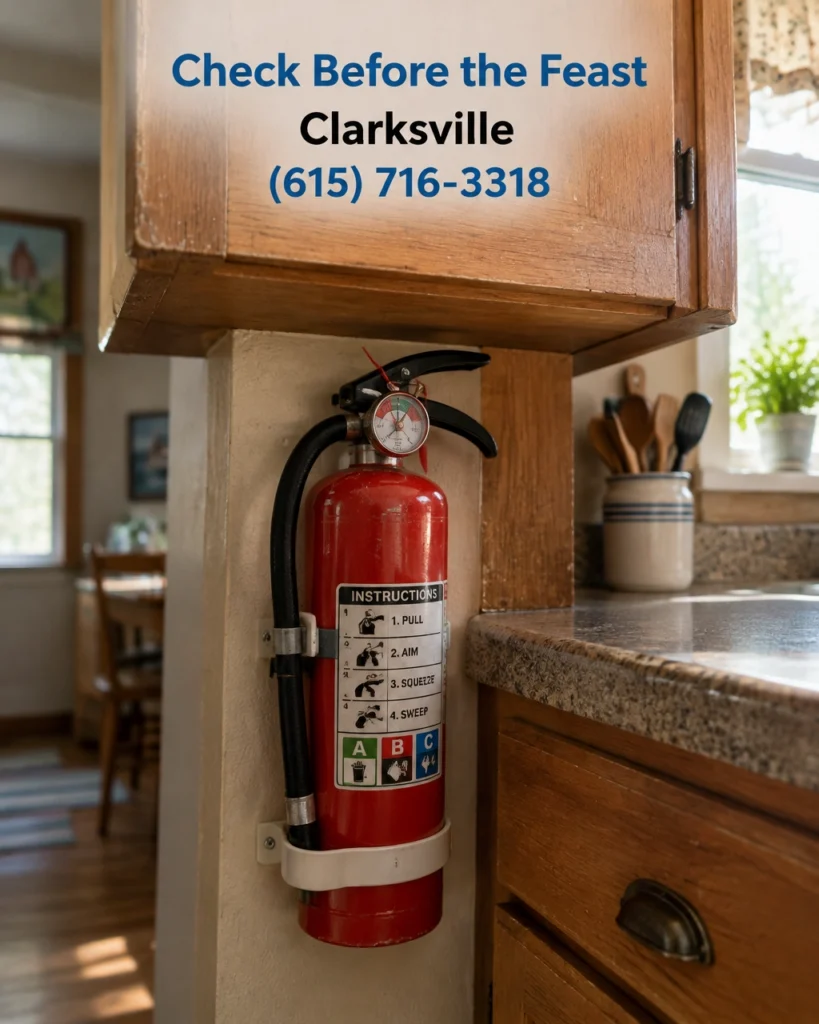
1. Give the kitchen a five minute check
A quick check the week before a big cooking day can take one small worry off your plate. Cooking is the leading cause of home fires and home fire injuries. The U.S. Fire Administration reports that in 2021, cooking fires caused an estimated 135 deaths, 3,000 injuries, and more than $494 million in property loss. Unattended equipment was the leading factor in 37 percent of nonconfined cooking fires.
That’s a reason to stay nearby while cooking, not a reason to feel anxious about hosting. Check that the extinguisher is ready, visible, and easy to reach. The USFA cooking fire safety guidance also recommends staying by the pan and keeping a lid or baking sheet close.
While you’re checking the kitchen, make sure alarms are in working order. These smoke and carbon monoxide detector checks offer a useful reminder for the rest of the home.
2. Read the gauge and check the date
Look at the pressure gauge first. If the extinguisher has one, its needle should be in the green operating range. A needle in the red means it may not work as intended, so follow the label and arrange a replacement or service rather than counting on it.
Next, look for the date stamped into the neck or printed on the label. Disposable extinguishers generally need replacement 12 years after manufacture. Rechargeable models need professional service and a current service tag, with timing based on the manufacturer’s instructions. Don’t confuse a service tag with a replacement date.
A unit that came with a Clarksville house may look fine but have an unknown history. It could be past its service date, partly discharged, or missing a pull pin seal. If the label is too worn to read or the date is unclear, treat that as a reason to get its status checked.
3. Keep it on the route out
Mount the extinguisher where it’s easy to reach on the way out of the kitchen, not beside the burner where flames could block access. Don’t tuck it under the sink behind detergent or store it above the refrigerator. A mounted unit is easier to find than one loose in a drawer or crowded cabinet.
A homeowner in St. Bethlehem had moved an extinguisher into the cabinet above the fridge to keep the counters tidy. When a pan started smoking, it was out of reach, a reminder that tidy storage isn’t useful in a hurry.

For a secure mount, the bracket should fasten to a stud or solid cabinet frame. A screw set only into particle board can pull loose under the weight of the unit. Consider one extinguisher on each floor and another in the garage, while keeping each location clear and easy to access. In Sango and Woodlawn, a clear route matters more than a perfect-looking setup.
4. Know the right extinguisher and the pan plan
For most Clarksville homes, an ABC dry chemical extinguisher is a practical choice because it covers common household fire types. A commercial-style kitchen may need a Class K unit, so check local requirements and the equipment in that space. The label should clearly show the extinguisher’s class.
For a small grease fire in a pan, turn off the burner if it’s safe, then turn the exhaust fan off and cover the pan with a metal lid or baking sheet. Leave it covered until it cools. Never pour water or throw a wet rag onto burning grease, since that can spread the fire. Don’t carry a burning pan through the house.
If flames rise above the pan or spread beyond it, leave and call 911 from outside. Don’t try to fight a fire that’s growing or blocking your exit. A clear plan can make the kitchen feel less stressful. These garbage disposal checks and holiday drain tips can help you get other cooking-day chores out of the way.

5. Practice the steps and find the exit
Know the basic sequence before a stressful moment. Pull the pin, aim at the base of a small fire, squeeze the handle, then sweep from side to side. Read the extinguisher label, since directions can vary by model.
Check that the pull pin is in place and its plastic seal is intact. If the manufacturer recommends it, give the extinguisher a gentle shake to keep powder loose. Teach everyone in the household, including older kids, where the unit is and how to use it. The step people often skip is noticing the exit behind them before discharging powder. Keep that route open, and replace an extinguisher after any use, even a brief one.
A holiday safety pass can include checking fireplace and hearth areas and reviewing holiday light and extension cord use. You don’t need to turn the week into a project. Just confirm what’s ready and make a note of what needs attention.
6. Make the check part of the turnover
Property managers and realtors across Clarksville can add the extinguisher to rental turnovers and pre-listing walkthroughs. Confirm that an in-date unit is mounted in the home, easy to reach, and has a record showing when it was checked. For investors with several rentals across Montgomery County or near Fort Campbell, keeping one simple record per property makes follow-up easier.
A new household extinguisher may run roughly 40 to 80 dollars. Mounting, alarm work, and small related repairs may run roughly 100 to 250 dollars, depending on the wall or cabinet, existing conditions, and the work needed. These are planning ranges, not quotes. Start by checking the gauge and date, then make a short list of anything that needs attention. A vetted local pro can look at the bracket, the wall behind it, and the alarm coverage in one visit.
If you’d like help with that, Fix It Quick Network can match you with a vetted local pro. The pros in the network are licensed and insured. Call or text (615) 716-3318, or request a free match.
Frequently asked questions
Does a rental kitchen need its own extinguisher?
A mounted, in-date extinguisher gives residents a known location and clear access. Owners and managers should also check applicable requirements for the property.
Should the gauge needle sit in the green?
Yes, if the model has a pressure gauge, the needle should be in its marked operating range. A needle in the red calls for service or replacement guidance.
When should a disposable extinguisher be replaced?
Disposable units generally need replacement 12 years after manufacture. Check the date and the manufacturer’s label.
Can water put out a grease fire?
No. Water can spread burning grease. Turn off the burner if safe, turn off the exhaust fan, cover the pan with a lid or baking sheet, and leave if the fire grows.
Where should a kitchen extinguisher be mounted?
Mount it on a clear route out of the kitchen, away from the stove and not hidden behind stored items. Secure its bracket to a stud or solid cabinet frame.
Should an extinguisher be replaced after use?
Yes. Replace a unit after any discharge, even if it was used briefly.