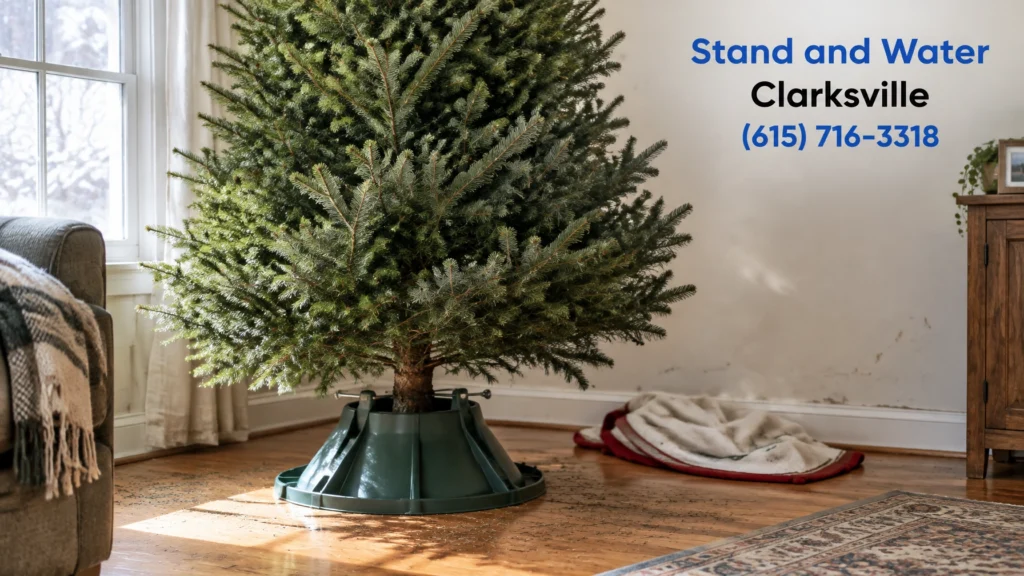
1. Pick the Spot Before You Pick the Tree
Choose the tree’s spot before bringing it inside. Keep it at least three feet from fireplaces, radiators, space heaters, candles, and heat vents. Heat can dry the branches faster, while an open flame or hot surface close by adds an avoidable risk.
Keep the tree clear of every exit path, curtains, and the TV or lamp cord. In a small Clarksville living room, check the ceiling height and door swing before settling on a tree size. A branch that catches a door can loosen the stand, and a top branch pressed against the ceiling makes the fit feel cramped.
If there’s a fireplace nearby, review these fireplace and hearth safety checks. For a room that relies on a portable heater, see the space heater season checklist. A few minutes spent picking a clear spot can make the rest of setup simpler.
2. Match the Stand to the Trunk
The stand needs to fit the trunk, not just the tree’s height. Check the stand’s trunk diameter limit and make sure its base sits flat. A green plastic stand with a trunk bolt that will not tighten past a certain point is the wrong fit, even if the tree appears steady at first.
Before setting the tree in the stand, cut about an inch off the base of the trunk. Make that fresh cut shortly before setup, then put the tree in water promptly. Use plain water with no additives. As a starting point, allow roughly one quart of water per inch of trunk diameter.
Check the reservoir twice a day for the first two days. A fresh cut tree can drink a gallon in a day, so don’t assume the stand is still full because it was topped off that morning. After the first two days, check it daily and keep water above the cut end.
Clarksville tap water can leave a hard white mineral ring inside the stand. Wipe it out when the stand is empty, then rinse it before filling again. It’s a small bit of cleanup that makes the water level easier to see.

3. Secure the Tree So It Cannot Tip
A wide, stable base gives a tall tree better support. Lightweight plastic stands on carpet are a common tip-over setup. Carpet pile can hide an uneven stand, and a narrow base gives a tall tree less resistance when something bumps it.
A toddler reaching for a branch, a cat slipping behind the tree, or a dog’s tail brushing the lower limbs can shift the balance. A Sango homeowner put a seven foot tree into the plastic stand that came with a four foot tree from years earlier. On the second night, the cat went behind it, and the whole tree tipped into the coffee table.
For extra security, a small eye hook fastened into a wall stud can hold a length of monofilament line attached to the trunk. Keep the line snug without pulling the tree out of plumb. If the tree still rocks after the stand is tightened, take it down and correct the fit rather than hoping it settles.

4. Check the Needles Before the Tree Gets Dry
A quick needle check can tell you when a tree is losing freshness. Bend a needle between your fingers. A fresh needle usually bends, while a dry one may snap. For a drop test, gently shake the trunk and watch how many needles fall. A few older needles near the center are normal, but a steady shower means it’s time to pay attention.
Sticky resin on the trunk is one sign of freshness. Check the water level, room temperature, and how quickly needles are dropping before deciding what to do. Needles sweeping up by the handful by the third week are a practical signal that the tree may be ready to leave the house.
The USFA warns that a dry Christmas tree can burn hot and fast. Fire data also show that almost one third of home Christmas tree fires involve an electrical problem. Keep the tree watered and check light strands and cords before use. The holiday light and extension cord circuit guide covers those checks, and this kitchen fire extinguisher checklist offers another useful seasonal reminder.
5. Keep Tree Lights and Cords Clear
Read the manufacturer’s strand count before connecting lights, and don’t pinch a cord behind the tree against a wall. One tree skirt draped over a bundle of cords is a common miss, so check the floor before hiding the stand. Unplug the lights before bed, and use the holiday lights and extension cord guide for the full circuit check.
6. Plan for Rentals, Listings, and Removal
Across Montgomery County, tenants should check the lease before bringing in a live tree. Property managers can put the live tree rules, stand and watering reminders, and removal date in a fall notice. A reminder can also point tenants to the guest bedroom and linen closet readiness checklist if the home will host visitors.
A vacant Clarksville listing is usually better off with an artificial tree. A live tree in an empty home can dry out without anyone noticing, while a simple artificial one avoids daily watering during showings. Realtors can also keep the tree clear of the walkways buyers need to see.
For rentals in St. Bethlehem, Fort Campbell, and Woodlawn, include tree removal in the move out or holiday cleanup notes. Remove a dry tree before the city pickup date, and don’t leave it on the curb for weeks. Needles can scatter, and a dry tree left near the home is still a fire concern.
As planning ranges, a stand rated for a real trunk may cost roughly $25 to $60. Anchoring a tall tree to a wall, hanging a hook, and handling small related fixes may run roughly $60 to $150. Those are planning ranges, not quotes. The cost depends on the stand, wall access, and what needs attention.
If you’d like a hand with any of this, Fix It Quick Network can match you with a vetted local pro, free. Call or text (615) 716-3318, or request a free match. Start by noting the trunk size, stand condition, and any concern about the room or wall.
Frequently Asked Questions About Christmas Trees in Clarksville Homes
How often should a fresh tree be watered?
Check it twice a day for the first two days, then check daily. Keep the water above the cut end of the trunk.
Does a Christmas tree need additives in its water?
No. Plain water is enough. Additives are not needed.
How can you tell whether a tree is dry?
Bend a needle and see whether it snaps, then gently shake the trunk and watch for heavy needle drop. A dry tree should be removed.
Can a tree stand be too small for the tree?
Yes. The stand must fit the trunk diameter and hold the tree securely. A tall tree also needs a wide, stable base.
Is an artificial tree a better choice for a vacant listing?
It can be. An artificial tree does not need daily watering, which can make it a more practical option in an empty staged home.
What should happen if the tree starts to tip?
Keep people and pets clear, then take the tree down and check the stand fit and base. Don’t leave it standing if it rocks or will not stay secure.